
Lumbar Facet RFA
Chronic low back pain from arthritic or inflamed facet joints can make standing, bending, and turning painful. Lumbar Facet RFA uses controlled radiofrequency heat to quiet the medial branch nerves that carry these pain signals, offering longer relief than a diagnostic block or simple injection.
Your journey
Your Road to a Pain-Free Life
Before Your Visit
Preparing for a precise lumbar RFA procedure.
Key Points
Bring lumbar MRI, CT, X-ray, and prior block reports
Document how much relief you got from medial branch block(s)
Stop blood thinners only after medical advice
Arrange someone to drive you home
For females: please remove all jewellery, nail polish, nail caps, and makeup before the procedure
What to Expect
Your diagnostic block response is important. Dr. Jain will use your pain diary, imaging, and examination to decide which lumbar levels and sides should be treated.

Patient is relaxed and ready for the procedure
← Swipe to explore stages →
Before Your Visit
Preparing for a precise lumbar RFA procedure.
Key Points
Bring lumbar MRI, CT, X-ray, and prior block reports
Document how much relief you got from medial branch block(s)
Stop blood thinners only after medical advice
Arrange someone to drive you home
For females: please remove all jewellery, nail polish, nail caps, and makeup before the procedure
What to Expect
Your diagnostic block response is important. Dr. Jain will use your pain diary, imaging, and examination to decide which lumbar levels and sides should be treated.
Test your knowledge
How Well Do You Know This Procedure?
Which nerves are targeted during Lumbar Facet RFA?
Frequently asked questions
What is Lumbar Facet RFA?
Lumbar Facet RFA, also called lumbar medial branch radiofrequency ablation or radiofrequency neurotomy, is an image-guided procedure for chronic low back pain coming from the lumbar facet joints. It uses controlled heat to interrupt pain signals carried by the medial branch nerves.
What kind of back pain does Lumbar Facet RFA treat?
It is most useful for axial low back pain caused by lumbar facet arthritis, spondylosis, or mechanical facet strain. The pain is often worse with standing, backward bending, twisting, or getting up from a chair. It may refer to the buttock, hip, groin, or back of the thigh, but it is not primarily a treatment for true sciatica from a compressed nerve root.
Do I need a medial branch block before Lumbar Facet RFA?
Yes. A diagnostic lumbar medial branch block is usually performed first to confirm that the facet joints are the pain source. If the block gives meaningful temporary relief, RFA is more likely to help. Some patients may need two diagnostic blocks before RFA, depending on the clinical situation.
How is Lumbar Facet RFA performed?
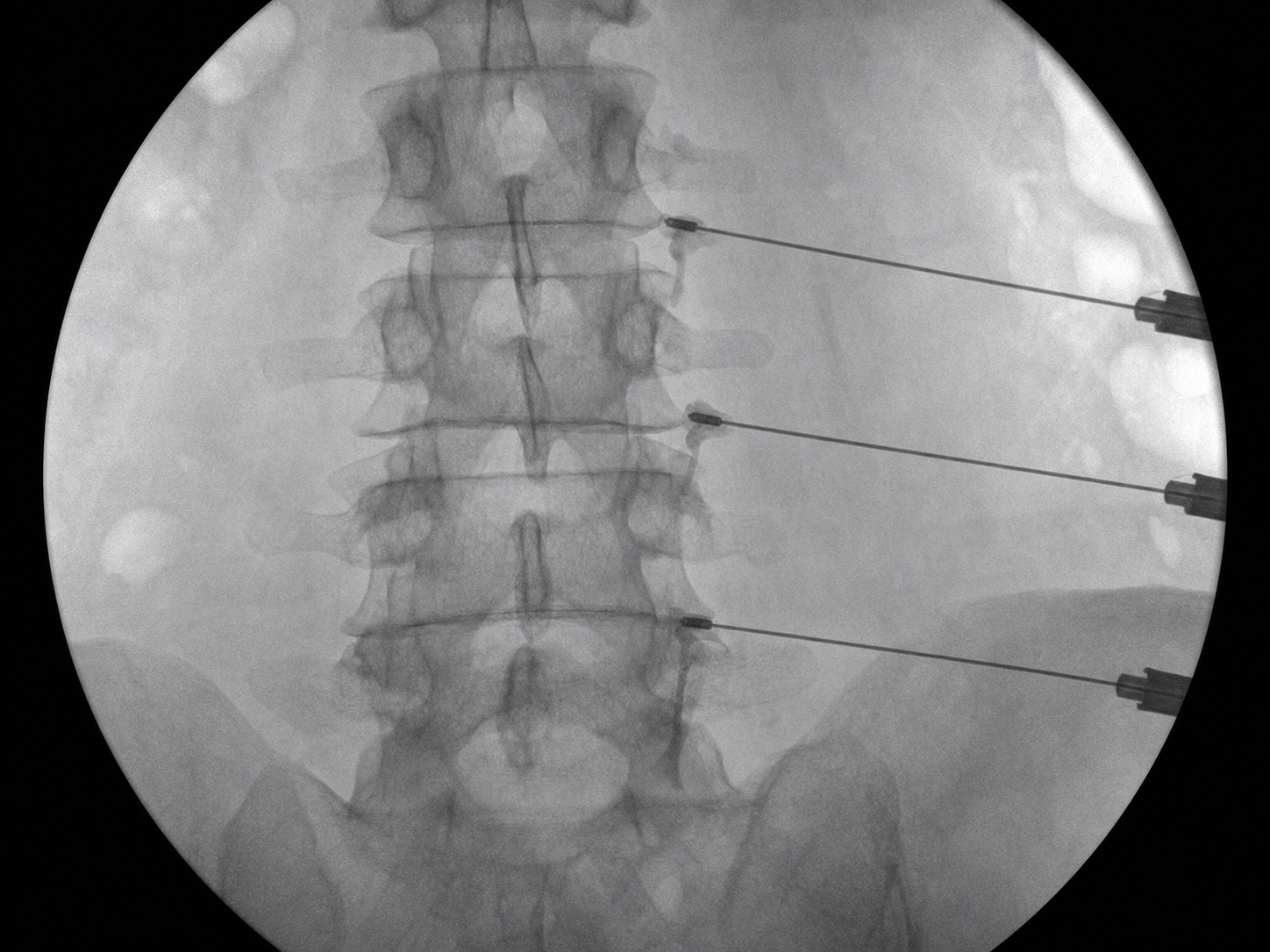
You lie face-down on a fluoroscopy table. The skin is cleaned and numbed. Under live X-ray guidance, RF cannulas are placed at the bony targets where the lumbar medial branch nerves run, usually near the junction of the transverse process and superior articular process. Sensory and motor stimulation confirm safe positioning, local anaesthetic is injected, and radiofrequency heat is applied to each target nerve.
When will I feel better after Lumbar Facet RFA?
Relief is usually gradual. The procedure site can feel sore for several days to 1-2 weeks. Pain reduction then builds as the treated medial branch nerves stop carrying facet joint pain signals. Many patients notice meaningful improvement within 2-6 weeks.
How long does Lumbar Facet RFA last?
Pain relief commonly lasts 6-12 months and may last longer in some patients. The medial branch nerves can regenerate over time. If the same facet pain returns after a good response, the procedure can often be safely repeated.
Is Lumbar Facet RFA safe?
Lumbar Facet RFA is generally safe when performed with imaging guidance and proper patient selection. Temporary soreness, bruising, numbness, or burning neuritis-like pain can occur. Serious complications such as infection, bleeding, or nerve injury are uncommon. Dr. Jain will review your blood thinner use, infection risk, and neurological symptoms before planning the procedure.