
Cervical Epidural Adhesiolysis
Persistent neck and arm pain can continue even after medicines, physiotherapy, or a standard epidural injection. Cervical Epidural Adhesiolysis uses a fine catheter to reach the restricted epidural pathway and deliver anti-inflammatory medicine closer to the irritated cervical nerve root.
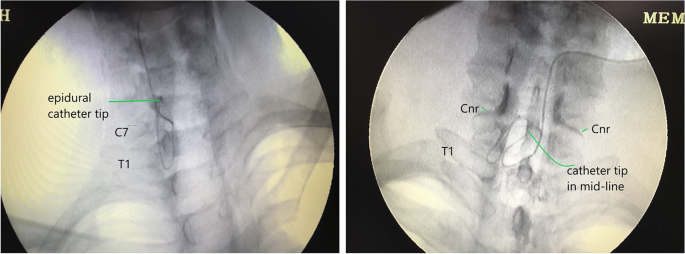
Image adapted from Diwan et al., Ain-Shams Journal of Anesthesiology, 2023, CC BY 4.0.
Your journey
Your Road to a Pain-Free Life
Before Your Visit
Preparing for a safe cervical catheter procedure.
Key Points
Bring cervical MRI or CT reports and previous injection details
Stop blood thinners 3–7 days before only after medical advice
Inform us about diabetes, infection, allergies, or prior cervical surgery
Arrange someone to drive you home
For females: please remove all jewellery, nail polish, nail caps, and makeup before the procedure
What to Expect
The team reviews your medical history and imaging before the procedure day. Blood thinner planning and infection screening are especially important for cervical epidural procedures.

Patient is relaxed and ready for the procedure
← Swipe to explore stages →
Before Your Visit
Preparing for a safe cervical catheter procedure.
Key Points
Bring cervical MRI or CT reports and previous injection details
Stop blood thinners 3–7 days before only after medical advice
Inform us about diabetes, infection, allergies, or prior cervical surgery
Arrange someone to drive you home
For females: please remove all jewellery, nail polish, nail caps, and makeup before the procedure
What to Expect
The team reviews your medical history and imaging before the procedure day. Blood thinner planning and infection screening are especially important for cervical epidural procedures.
Test your knowledge
How Well Do You Know This Procedure?
What is the main purpose of Cervical Epidural Adhesiolysis?
Frequently asked questions
What is Cervical Epidural Adhesiolysis?
Cervical Epidural Adhesiolysis, also called cervical epidural neuroplasty or the Racz catheter procedure, is an image-guided catheter procedure for persistent neck and arm nerve pain. A fine catheter is guided into the cervical epidural space so medicine can be delivered close to the irritated nerve root and areas where scarring, inflammation, or restricted spread may be contributing to pain.
Who may benefit from this procedure?
It may help patients with chronic neck pain radiating to the shoulder, arm, or hand due to cervical disc disease, cervical radiculopathy, foraminal narrowing, or suspected epidural adhesions. It is usually considered when medicines, physiotherapy, and simpler injections have not provided enough relief.
How is Cervical Epidural Adhesiolysis different from a regular epidural injection?
A regular cervical epidural injection places medicine into the epidural space through a needle. Adhesiolysis uses a steerable catheter, allowing the doctor to direct the tip toward the affected level and improve medicine spread around the irritated nerve root. This can be useful when inflammation or adhesions limit the effect of a standard injection.
How is the procedure performed?
You are positioned comfortably and the skin is cleaned and numbed. Under live X-ray guidance, a needle is placed into the cervical epidural space, commonly near the lower cervical or upper thoracic entry level. A thin catheter is then advanced carefully toward the target cervical level. Contrast dye confirms safe spread, followed by local anaesthetic, steroid, saline, and sometimes an enzyme medicine to help open restricted tissue planes. The procedure usually takes 30–45 minutes.
When will I feel relief?
Some patients feel early relief from the local anaesthetic, but the anti-inflammatory benefit usually builds over several days to a few weeks. Neck and arm pain, tingling, and movement tolerance are reviewed at follow-up to judge the response.
How long can the relief last?
Relief varies depending on the cause of pain, severity of nerve irritation, and how much scarring or narrowing is present. Many patients experience relief for weeks to months, and selected patients may get longer benefit when the procedure is combined with medicines, posture correction, and physiotherapy.
Is Cervical Epidural Adhesiolysis safe?
It is a specialised cervical spine procedure and should be performed only by an experienced interventional pain physician using live imaging and contrast confirmation. Mild soreness, temporary numbness, headache, or dizziness can occur. Serious complications such as infection, bleeding, dural puncture, nerve injury, catheter-related problems, or spinal cord irritation are rare but important to discuss before the procedure.