
 Jain Pain Clinic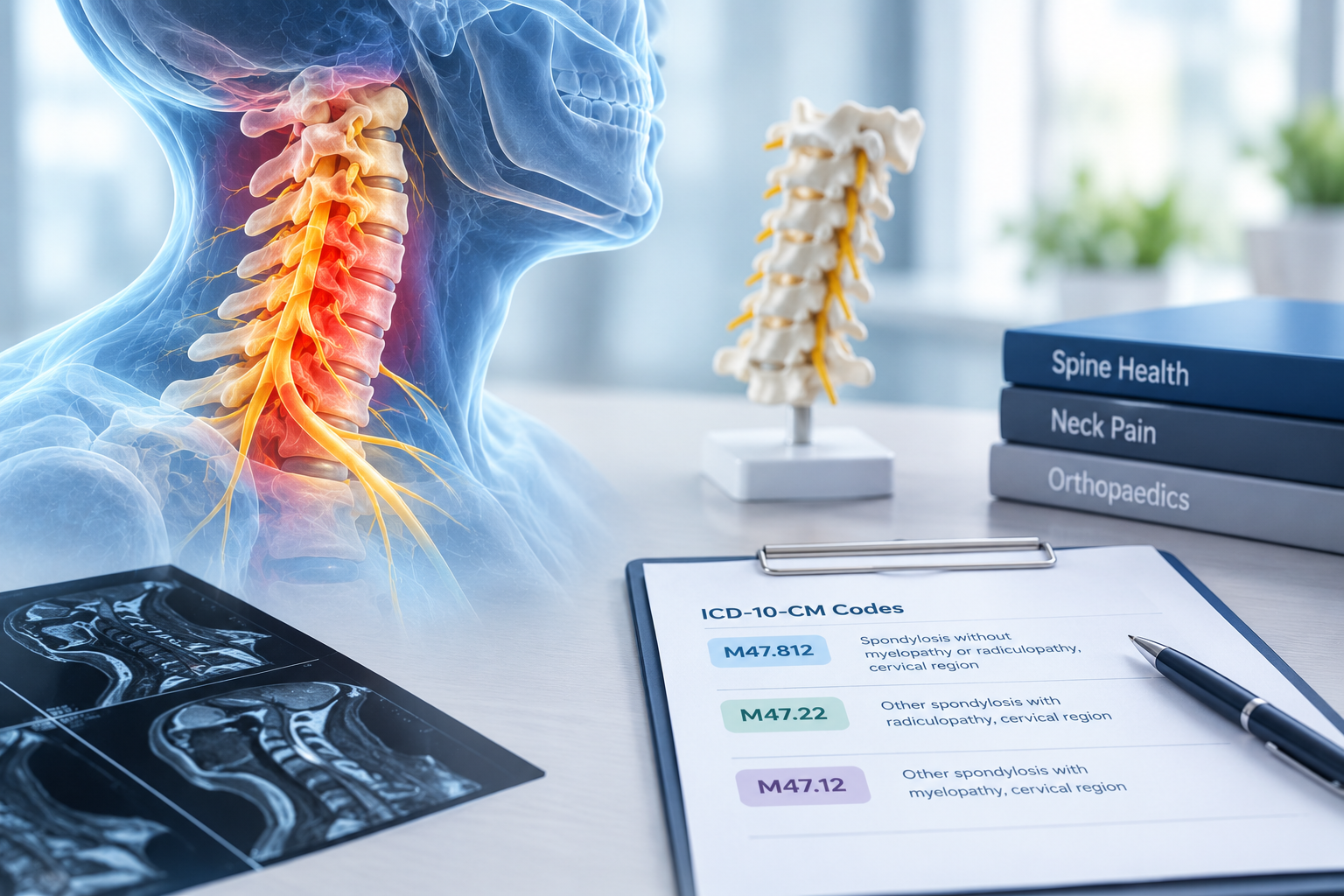
In ICD-10-CM, M47.812 describes cervical spondylosis without myelopathy or radiculopathy. M47.22 describes other spondylosis with radiculopathy in the cervical region, while M47.12 describes other spondylosis with myelopathy in that region. The distinction concerns nerve-root or spinal-cord involvement. The correct code follows the documented diagnosis and applicable coding rules; it cannot be selected safely from neck pain or an MRI phrase alone.
On this page
Are ICD-10 and ICD-10-CM the Same?
ICD is a system for classifying diseases and health conditions. ICD-10-CM is the United States clinical modification of ICD-10. The detailed codes discussed here belong to ICD-10-CM; they should not be assumed to have identical administrative use in every country.
For patients in India, ask the hospital or insurer which classification and documentation they require. A useful online explanation of a US code is not confirmation that it is the code required for your own claim, referral or hospital record.
The CDC release page identifies the applicable editions. The April 2026 release applies to US services from 1 April through 30 September 2026; FY2027 begins on 1 October 2026. Match the edition to the date of service rather than simply choosing the newest file.
| Code | Descriptor | Plain-language distinction |
|---|---|---|
| M47.812 | Spondylosis without myelopathy or radiculopathy, cervical region | The coded diagnosis does not include nerve-root or spinal-cord involvement. |
| M47.22 | Other spondylosis with radiculopathy, cervical region | The coded diagnosis includes cervical nerve-root involvement. |
| M47.12 | Other spondylosis with myelopathy, cervical region | The coded diagnosis includes spinal-cord dysfunction associated with spondylosis. |
What Does M47.812 Mean?
M47.812 describes spondylosis in the cervical region without the radiculopathy or myelopathy specified in the other two codes. It does not grade your pain, measure disability or promise that the symptoms are mild.
The words without myelopathy or radiculopathy describe the coded diagnosis. They should not become a reason to ignore a new symptom after the document was written. If arm weakness or changes in walking develop, the clinical situation needs reassessment even if an older record still carries this code.
A useful question at follow-up is whether the diagnosis remains the same and what the current examination shows. That is more helpful than asking for a different code solely because pain has become more intense.
What Does M47.22 Mean?
M47.22 is the cervical category for other spondylosis with radiculopathy. Radiculopathy concerns a nerve root. It may be associated with pain travelling into an arm, altered sensation, tingling or weakness, but those symptoms alone do not establish the cause.
A clinician considers whether the pattern and examination fit a cervical nerve-root problem and how the documented cause relates to the classification. Symptoms can overlap with shoulder conditions or nerve problems elsewhere in the arm.
If a cervical disc disorder is documented as the cause, a different coding category may be relevant. Do not interchange a spondylosis code and a disc-disorder code just because both conditions can involve arm pain.
What Does M47.12 Mean?
M47.12 describes other spondylosis with myelopathy in the cervical region. Myelopathy refers to spinal-cord dysfunction. It is different from radiculopathy, which concerns a nerve root, and different from neck stiffness alone.
Changes in hand coordination, walking or balance are important clinical details. New or worsening weakness or coordination problems require urgent assessment; sudden neurological changes or new bladder or bowel dysfunction with spinal symptoms need emergency care.
The priority is the person and their symptoms, not correcting paperwork first. A code is a record of a diagnosis, not a tool for deciding at home whether spinal-cord dysfunction is present.
How Are These Different From M54.2 and M54.12?
M54.2 describes cervicalgia, meaning neck pain. M54.12 describes radiculopathy in the cervical region. These are not automatic substitutes for a documented spondylosis-related or disc-related diagnosis, and codes should not simply be stacked together because several descriptions sound familiar.
Our existing guide to neck pain codes M54.2, M54.12 and M54.81 explains those broader terms. This article focuses on the spondylosis categories and their different clinical meanings.
Professional code selection requires checking the index, tabular notes and applicable guidance against the clinical documentation. The short table above is an explanation for readers, not a complete billing instruction.
Can You Choose a Code From an MRI Report?
A scan describes structures. A clinical diagnosis explains how findings relate to the person being assessed. An administrative code classifies the documented diagnosis. These are connected, but they are not the same task.
For example, an MRI may mention degenerative changes at C5–C6. That phrase alone does not tell you whether the person has radiculopathy or myelopathy. The report may also describe several findings, not all of which explain the current symptoms.
Read our cervical spondylosis treatment guide for questions to ask about scan terminology. Take the report to the clinician instead of trying to turn each imaging phrase into a separate diagnosis.
| Part of the record | What to clarify |
|---|---|
| Imaging report | What changes are visible, and which might be relevant? |
| Clinical assessment | What diagnosis explains the symptoms and examination? |
| Diagnosis code | Does the code reflect the documented diagnosis and required classification? |
What If Different Documents Use Different Wording?
A referral may have been written before a full assessment, while a later clinic letter may record a more specific diagnosis. That can explain some differences, but a mismatch is worth clarifying rather than assuming one document must be wrong.
Keep the document dates together and highlight the exact phrases you do not understand. Ask the treating team which diagnosis is current and whether any correction or additional explanation is needed. Avoid editing a report or choosing a replacement code yourself.
If an insurer has requested clarification, pass on the precise request. It may concern the diagnosis, treatment indication, procedure details or supporting records. Sending only a different code may not answer the actual question.
Does the Code Determine Treatment or Insurance Coverage?
No single code tells you which treatment will help, whether you need surgery or what an insurer will pay. Treatment decisions involve the clinical problem and the person's goals. Coverage depends on the particular policy and its requirements.
Ask for a written explanation of the proposed treatment and an itemised estimate if cost is a concern. When seeking insurance approval, confirm the documents needed with the insurer and treating facility. A code appearing on a bill is not itself a guarantee of reimbursement.
For treatment options rather than classification, see neck pain treatment without surgery . The relevant question is what is being treated and why, not whether a code appears to sound more serious.
A Checklist for Your Next Appointment
Bring the paperwork and a short account of your symptoms. These questions can make the discussion clearer:
- What is my current diagnosis in plain language?
- Is there evidence of nerve-root or spinal-cord involvement?
- Which scan findings match the examination?
- Which coding system and date of service apply to this document?
- Does any discrepancy need correction by the treating or coding team?
- What symptom change should prompt an earlier review?
Getting Help for Persistent Neck Symptoms
If paperwork has left you unsure about persistent neck pain, a clinical assessment can help separate the diagnosis from the terminology. Dr Ashu Kumar Jain provides pain-medicine assessment at Jain Pain Clinic in Gurugram. Visit our neck pain treatment page for consultation information.
The useful outcome is a clear explanation of the problem, the next step and when to follow up. A correct code supports the record, but your symptoms and function remain central to care.
Resources
- ICD-10-CM files and applicable release datesCDC / National Center for Health Statistics
- ICD-10-CM release filesCenters for Medicare & Medicaid Services
- Cervical spondylosis: symptoms and when to seek helpNHS
- Cervical radiculopathy: pinched nerveAAOS OrthoInfo
Frequently asked questions
Is M47.812 the same as cervicalgia?
No. M47.812 describes cervical spondylosis without myelopathy or radiculopathy, while M54.2 describes cervicalgia or neck pain. Code selection follows the documented diagnosis and applicable classification rules.
Does M47.22 mean I have a slipped disc?
Not necessarily. M47.22 describes other cervical spondylosis with radiculopathy. A documented cervical disc disorder may require a different category; the terms should not be exchanged based on symptoms alone.
Are myelopathy and radiculopathy the same?
No. Myelopathy concerns spinal-cord dysfunction; radiculopathy concerns a nerve root. They can coexist, but their clinical and coding implications require professional assessment.
Does M47.12 automatically mean surgery?
A code alone cannot decide treatment. A diagnosis involving cervical myelopathy needs prompt specialist assessment to discuss severity, management and the risks of delay.
Can I use these ICD-10-CM codes for an Indian insurance claim?
Confirm the required coding system and supporting documentation with your hospital and insurer. These examples use the US clinical modification and are not a universal instruction for Indian claims.
Does the code guarantee insurance approval?
No. Approval depends on the policy, clinical documentation and other requirements. Ask the insurer and treating facility what is needed for your particular case.