
 Jain Pain Clinic
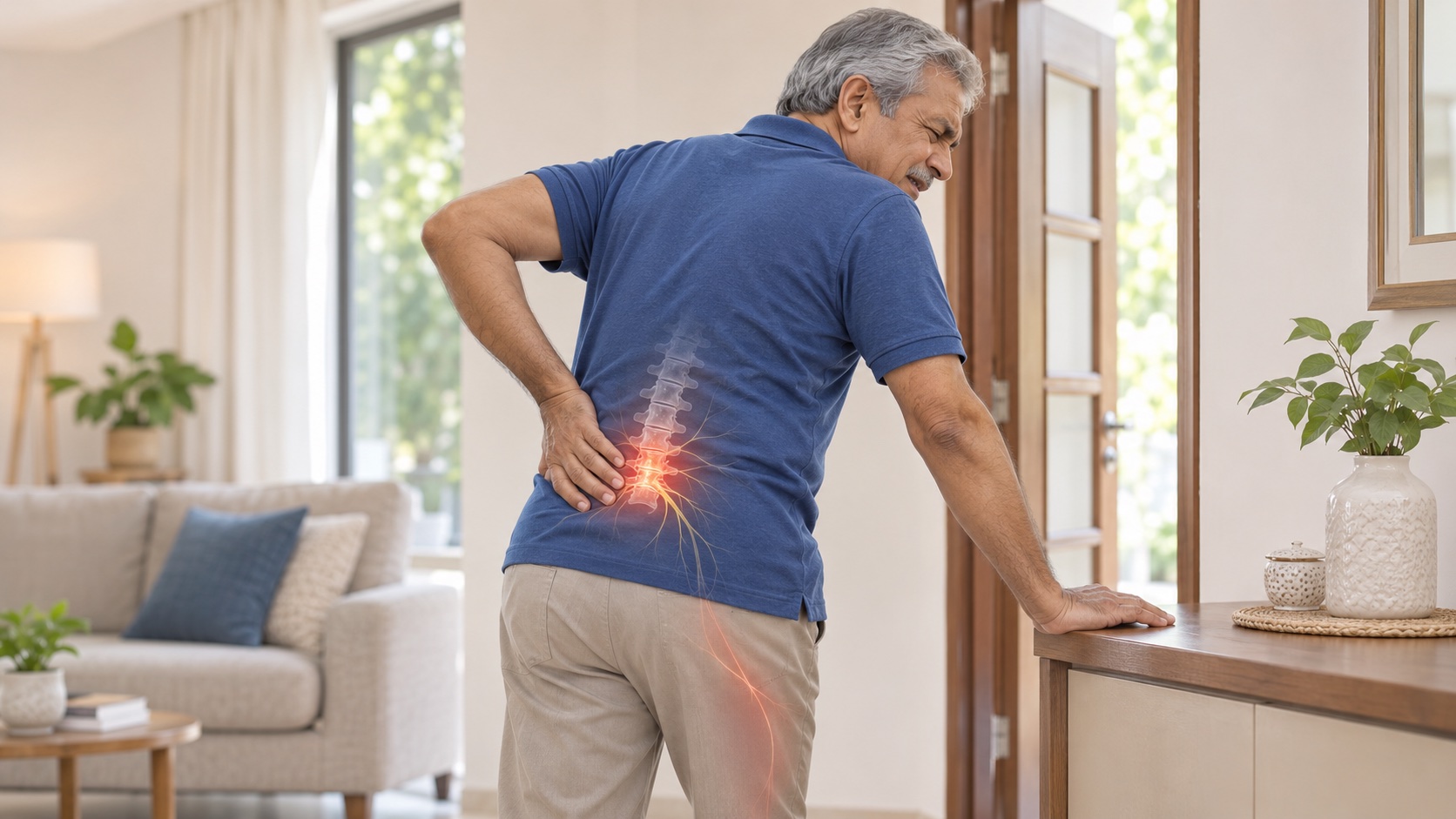
You start a walk comfortably, but your legs soon ache, tingle or feel heavy. Sitting for a few minutes helps, and leaning over a shopping trolley seems easier than standing upright. This pattern can occur with lumbar spinal stenosis. It deserves assessment because poor circulation and other conditions can cause similar walking limitations. Treatment should address the cause and the activities you want to regain, rather than rely on the wording of a scan.
On this page
What Is Lumbar Spinal Stenosis?
Lumbar spinal stenosis means narrowing of spaces available for nerves in the lower back. Age-related changes in discs, joints and ligaments can contribute. Narrowing may involve the central canal or the areas where individual nerves travel and leave the spine.
Some people have narrowing on imaging without troublesome symptoms. Others develop leg pain, numbness or reduced walking tolerance. The important question is whether the history, examination and imaging point to the same explanation for your current limitations.
Why Do Walking and Standing Trigger Symptoms?
For some people, standing upright or extending the lower back reduces the available space around sensitive nerves. Sitting or bending slightly forward can make symptoms easier. Walking-related leg symptoms from this mechanism are called neurogenic claudication.
Pain may affect the buttocks, thighs or lower legs, sometimes on both sides. Heaviness, tingling and a feeling that the legs will not keep going can be more noticeable than back pain. A shopping-trolley pattern is a clue, not a test that confirms the diagnosis.
Could the Problem Be Poor Circulation Instead?
Peripheral arterial disease can also cause leg discomfort during walking that settles with rest. A clinician may check pulses, skin changes and risk factors and, when appropriate, arrange a circulation assessment. Spine-related and vascular problems can coexist.
Our article on smoking-related leg pain and circulation covers a different pathway that should not be overlooked. Cold feet, colour changes or wounds that do not heal are important details to mention.
Do not repeatedly walk to severe pain to work out the cause yourself. Describe where symptoms start, how far you walk before stopping and whether standing still is enough to settle them or you need to sit or bend forward.
When Is It an Emergency?
New difficulty passing urine, loss of bladder or bowel control, numbness around the genitals or anus, or severe or worsening weakness in both legs needs emergency assessment. These can indicate serious nerve compression and should not be managed as an ordinary flare.
A suddenly painful, cold, pale or numb foot also needs urgent assessment for impaired blood supply. Increasing weakness or a new foot drop warrants prompt medical review even without bladder symptoms. Do not delay an assessment while waiting for a routine scan appointment.
What Should an Assessment and MRI Clarify?
The assessment includes the symptom history, walking ability, leg strength, sensation and relevant examination of the spine, hips and circulation. MRI can show nerve-space narrowing, but a report cannot by itself decide whether surgery is needed.
Bring examples of real tasks: reaching a nearby shop, standing to prepare a meal or getting through a commute. Note whether the limitation is pain, balance, breathlessness or true weakness. These details help avoid attributing every walking problem to a spine scan.
Ask which part of the scan matches the symptoms, whether another condition contributes and what a proposed test would change. A more alarming-sounding report is not automatically evidence that daily function has deteriorated.
What Can Help Without Surgery?
An individual plan may include education, supervised exercise, activity adjustments and a review of suitable symptom relief. Rehabilitation aims to improve strength, endurance, balance and confidence within your health and current ability. It does not physically reverse the narrowing.
Shorter walks with planned rests may be more manageable than repeatedly reaching a severe flare. Some people tolerate supported walking or cycling better, but the choice depends on balance, heart and lung health and symptom response. Have walking aids fitted and demonstrated if recommended.
Choose one functional goal and agree a starting point you can repeat. If an activity causes new weakness or a clear deterioration, stop and seek advice. Improving tolerance is different from simply accepting progressively less activity.
- Record a familiar walking distance and the time needed to recover.
- Break up prolonged standing with comfortable position changes.
- Ask for an exercise plan matched to the findings, not only a generic back routine.
- Review medicines for benefit and unwanted effects such as dizziness or sleepiness.
Do Epidural Injections Treat Spinal Stenosis?
An injection does not widen the spinal canal. Evidence and recommendations depend on the exact pain pattern, so results from acute sciatica should not automatically be applied to walking-related symptoms from central stenosis.
In a randomised trial of epidural injections for lumbar spinal stenosis adding a glucocorticoid to lidocaine produced minimal or no extra short-term benefit compared with lidocaine alone. Because both groups received an injection, this did not establish that either was better than no injection.
The NICE low-back-pain and sciatica guideline recommends against epidural injections for neurogenic claudication caused by central spinal canal stenosis. If a procedure is proposed, ask which diagnosis it targets, what evidence applies and what improvement would justify it.
Procedures aimed at a separate source of back pain may address that component, but should not be described as removing the stenosis. A treatment plan needs a clear target and a review of alternatives.
When Should You Discuss a Surgical Opinion?
A spinal specialist may discuss decompression when leg symptoms and walking restriction remain substantial despite appropriate non-surgical care, or when neurological findings make earlier assessment necessary. The aim is to create more space for affected nerves.
The decision considers the examination, imaging, health, expectations and previous treatment together. Fusion is not required for every stenosis operation; ask why it is being considered in your case. Surgery also has risks and cannot guarantee complete relief of every pain.
Ask which symptoms are most likely to improve and what recovery involves. Leg symptoms from nerve compression and a separate longstanding backache may respond differently. A pain consultation and a surgical opinion can be useful parts of the same assessment.
Preparing for Review at Jain Pain Clinic
Bring the MRI report and images if available, previous treatment details and your medicine list. Explain what has changed over time and whether walking distance is stable or declining. Report new weakness separately from pain.
At Jain Pain Clinic, discuss which part of the problem needs rehabilitation, symptom management, a circulation assessment or a spinal opinion. A useful plan should state the next step, its purpose and when progress will be reviewed. The goal is a safer, more manageable daily routine and a clear response to any deterioration.
Resources
- Lumbar spinal stenosis: symptoms and treatmentAAOS OrthoInfo
- Spinal stenosis: diagnosis and treatment decisionsNIAMS
- Spinal stenosis: walking and rehabilitationNHS inform
- Peripheral arterial disease: walking pain and circulationNHS
- Epidural glucocorticoid injections for spinal stenosis: randomised trialNew England Journal of Medicine, 2014
- Low back pain and sciatica: treatment recommendationsNICE NG59
- Lumbar spinal stenosis: surgical assessmentAmerican Association of Neurological Surgeons
Frequently asked questions
Does leg pain that improves with sitting always mean spinal stenosis?
No. The pattern can suggest neurogenic claudication, but circulation, hip and other problems need consideration. Diagnosis requires a clinical assessment.
Can I have spinal stenosis without much back pain?
Yes. Leg pain, heaviness, numbness or reduced walking tolerance may be more prominent than lower-back pain.
Does severe narrowing on MRI mean I need surgery immediately?
Not by itself. Symptoms, examination and function matter. New bladder or bowel problems, saddle numbness or major neurological deterioration need urgent assessment.
Can exercise open a narrowed spinal canal?
Exercise does not remove the narrowing. A suitable programme may improve strength, endurance and daily function.
Will an epidural injection cure stenosis?
No. It does not enlarge the canal, and evidence for walking-related symptoms from central stenosis is limited. Ask what diagnosis and outcome a proposed injection addresses.
What should I measure while trying treatment?
Use a repeatable task such as a familiar walking route or standing activity. Note symptoms, rests and recovery, and report any new weakness promptly.