
 Jain Pain Clinic
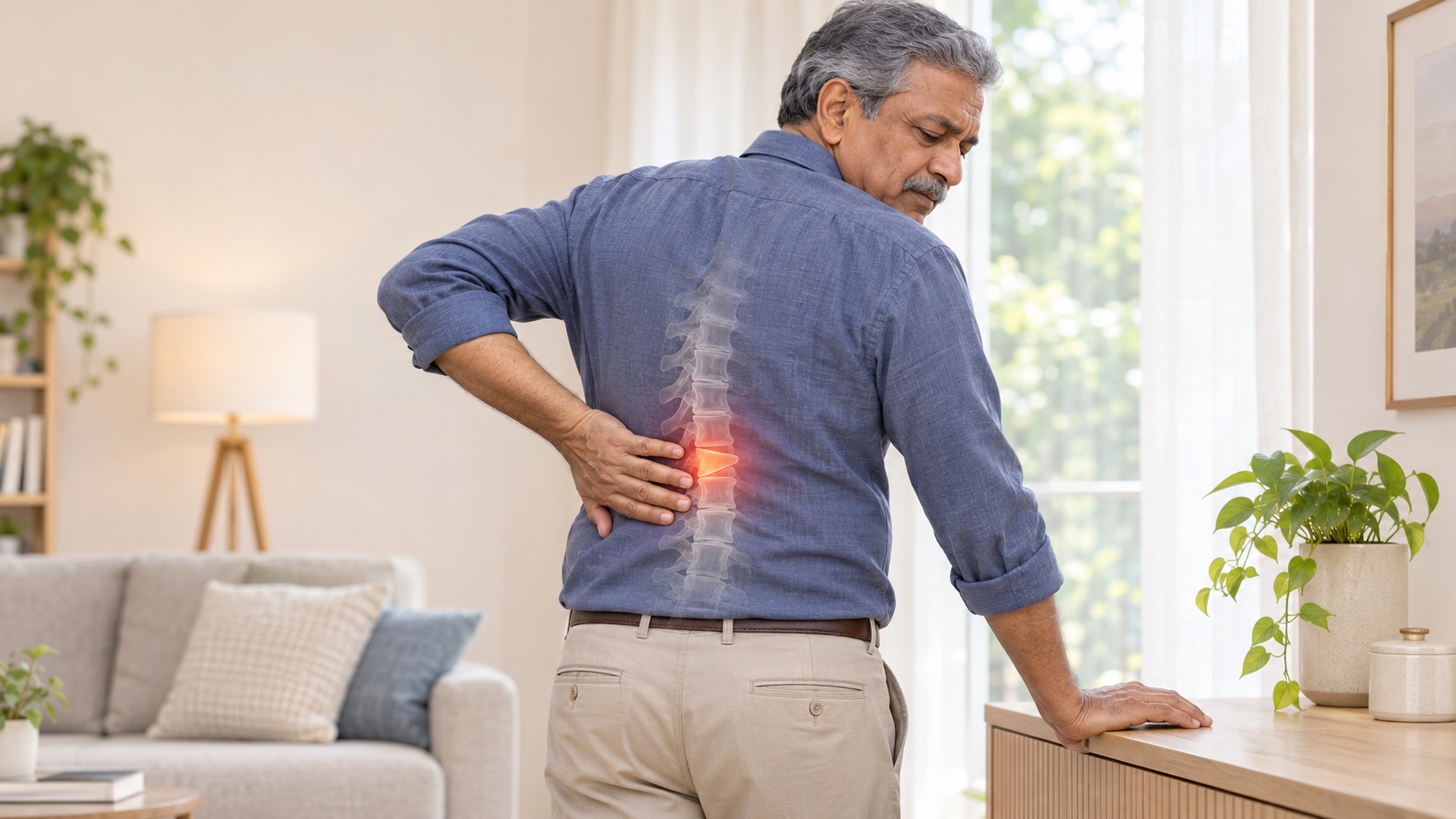
You bend to lift something light and develop a new, sharply localised back pain. Or pain appears after a small stumble that would once have seemed harmless. In someone with fragile bones, a vertebral compression fracture is one possibility. It should not automatically be dismissed as muscle strain or an inevitable part of ageing. Assessment needs to identify the painful structure, check for nerve involvement and address the risk of another fracture.
On this page
What Is a Vertebral Compression Fracture?
A vertebra is one of the bones forming the spine. In a compression fracture, part of the vertebral body loses height or collapses, sometimes producing a wedge shape. Osteoporosis makes bone more fragile, so a relatively small load can be enough to cause a fracture.
The middle and lower back can be affected. Not every vertebral fracture causes obvious sudden pain, and an old fracture may be found incidentally. Conversely, a new painful fracture may occur without a major accident. The history and imaging need to be interpreted together.
Which Symptoms Should Prompt Assessment?
A new focal ache or sharp pain, particularly after a minor strain in someone at risk of osteoporosis, deserves attention. Pain may worsen with movement or being upright. Loss of height or a change in spinal shape may also lead to investigation, although these can develop gradually.
Tell the clinician about previous fractures, known low bone density, falls and long-term steroid treatment. Men can have osteoporosis too. The absence of a previous osteoporosis diagnosis does not rule out a fragility fracture.
Other conditions can cause similar symptoms, including muscle or joint pain, infection and cancer-related disease. The purpose of assessment is to distinguish them, not to assume that all new back pain in an older adult is a fracture.
When Is Back Pain an Emergency?
New leg weakness, numbness around the genitals or anus, or a new loss of bladder or bowel control needs emergency assessment. Severe back pain after a major accident also requires urgent evaluation. Do not wait for a routine pain appointment with these symptoms.
Back pain with fever, feeling very unwell or a relevant cancer history needs prompt medical review. Explain new or progressive symptoms separately from any familiar longstanding backache. A known old fracture should not automatically explain a new deterioration.
What Do X-Rays, MRI and Bone-Density Tests Tell You?
An X-ray can show vertebral height loss. MRI may help assess whether a fracture is recent or still active and investigate nerves or alternative causes. Other imaging is selected according to the question and the examination.
A bone-density scan, usually called DXA, answers a different question about bone strength and future fracture risk. It does not replace investigation of a newly painful part of the spine. Blood tests may also be used to check for contributing conditions.
Ask which finding matches the painful level and whether a fracture appears old or recent. An imaging label alone should not determine whether an invasive treatment is appropriate.
Initial Care: Pain Relief, Safe Movement and Support
Treatment often starts with suitable pain relief and practical help to move safely. The choice should account for age, kidney function, other medicines, constipation, dizziness and fall risk. Report side effects that make walking or alertness worse.
Follow the clinician’s advice about lifting, bending and movements while the fracture is healing. Prolonged bed rest can bring its own problems, so discuss a safe amount of mobility rather than assuming complete inactivity is protective.
A physiotherapist may guide transfers, walking and later strengthening. A brace may help selected patients, but it is not routinely required and does not have proven benefit for fracture healing. Ask what a proposed brace is intended to improve and how long it should be used.
When Are Vertebroplasty or Kyphoplasty Considered?
Vertebroplasty injects bone cement into a fractured vertebra. Kyphoplasty uses a balloon step before cement placement. These procedures are options for selected patients, rather than a routine response to every fracture shown on a scan.
The NICE appraisal on vertebral augmentation limits these options to severe ongoing pain after a recent, unhealed fracture despite optimal pain management, with the painful level confirmed by examination and imaging.
Other guidelines emphasise the inconsistent benefit of routine augmentation. This makes careful selection and discussion important. Ask what improvement is expected, what alternatives remain and which risks apply, including cement leakage, infection and possible nerve injury.
A procedure may help pain in an appropriately selected case, but it does not treat the underlying osteoporosis. Any decision should sit within a wider bone-health and rehabilitation plan.
Why Preventing the Next Fracture Matters
A fragility fracture is an important signal about future risk. Even when pain settles, arrange a bone-health assessment and discuss whether osteoporosis medication is needed. Treatment selection depends on risk, other conditions and previous medicines.
Calcium and vitamin D may be relevant when intake is inadequate or deficiency is present, but supplements alone are not a complete treatment for everyone. Avoid changing doses or stopping long-term medicines without advice.
Ask who will coordinate follow-up: your primary clinician, an osteoporosis service or a fracture liaison service where available. The plan should include monitoring and a clear explanation of any medication schedule.
Rehabilitation, Falls and Everyday Tasks
As recovery allows, an individual programme may include progressive strength, balance and back-extensor work. It should be adapted to the fracture and your starting ability. Do not force a generic routine of deep spinal bending or twisting while a new fracture is being assessed.
Review lighting, footwear, trip hazards and medicines that contribute to dizziness. Ask for help with the tasks that are currently difficult, such as getting out of bed, dressing or carrying shopping. A walking aid may be useful when properly selected and fitted.
- Keep a record of new falls, loss of height or changes in pain.
- Ask for instructions on safe lifting and returning to activity.
- Bring all medicines and supplements to the review.
- Continue bone-health follow-up even after the back feels better.
What to Bring to a Jain Pain Clinic Consultation
Bring the pain timeline, injury details, previous spine images, bone-density results and any history of fractures. Explain what you can no longer do and whether pain is stable or worsening. Mention neurological symptoms promptly.
A useful plan should identify the likely painful level, the role of non-surgical care, whether a spinal procedure or opinion is appropriate and how future-fracture risk will be addressed. Ask for a review point and instructions about symptoms that should trigger earlier assessment. Pain treatment and bone protection should progress together.
Resources
- Osteoporosis and spinal fracturesAAOS OrthoInfo
- Osteoporosis: diagnosis and fracture riskNHS
- Management of symptomatic osteoporotic vertebral fracturesNational Osteoporosis Guideline Group
- Vertebroplasty and kyphoplasty: recommendationsNICE TA279
- Vertebral augmentation: patient selection and governanceAcademy of Medical Royal Colleges
- UK osteoporosis guideline: rehabilitation and fracture preventionArchives of Osteoporosis, 2025
Frequently asked questions
Can a spinal fracture occur without a major fall?
Yes. Fragile vertebrae may fracture after a relatively small load or minor injury. New focal back pain in someone at risk deserves assessment.
Does an old fracture on a scan explain all new back pain?
No. The timing, examination and imaging need to match. New symptoms may require assessment for another cause.
Does every compression fracture need cement injection?
No. Vertebroplasty or kyphoplasty is considered only for selected patients after assessment of pain, fracture activity and response to suitable care.
Will a brace make the fracture heal faster?
That is not established. A brace may help selected patients with symptoms or support, but routine use is not recommended for everyone.
Do I still need osteoporosis treatment after the pain improves?
Pain improvement does not remove future-fracture risk. Bone-health review and, where appropriate, medication are important parts of follow-up.
Which symptoms need emergency care?
New significant leg weakness, saddle numbness or loss of bladder or bowel control needs emergency assessment. Severe pain after a major accident also requires urgent evaluation.