
 Jain Pain Clinic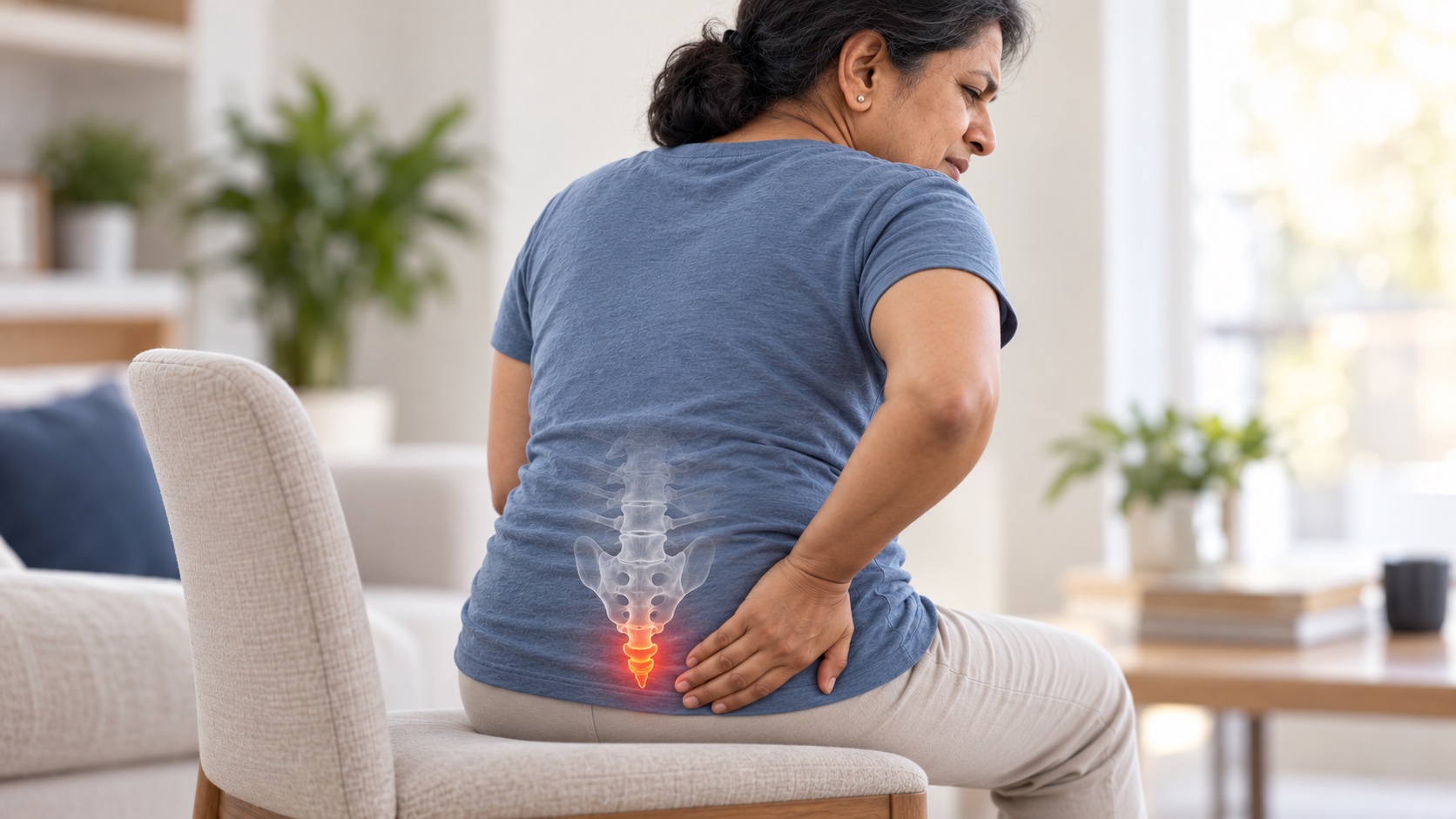
Sitting through a meeting becomes uncomfortable. A car journey leaves an ache at the very bottom of the spine, and standing up brings a sharp jab. This pattern can occur with tailbone pain, also called coccydynia. A fall is one possible cause, but pain can also develop without an obvious injury. Understanding the location and triggers helps you choose practical changes and recognise when assessment is needed.
On this page
Where Is the Tailbone, and What Is Coccydynia?
The coccyx is the small group of bony segments at the bottom of the spine, below the sacrum. Several muscles and ligaments attach around it, including structures associated with the pelvic floor. Coccydynia describes pain in this area; it does not identify the cause by itself.
The typical complaint is a local ache or tenderness near the midline at the top of the buttock crease. Pain may be sharper when sitting down or rising from a chair. This location is lower than the area people usually point to when describing a lumbar backache.
Why Does the Tailbone Hurt When You Sit?
Sitting can place pressure on sensitive tissues around the coccyx. Hard seats, prolonged sitting or repeated strain during activities such as cycling may aggravate the area. Symptoms can vary between chairs and with how long you remain seated.
Note whether the pain starts immediately or builds over time, and whether getting up briefly helps. A practical description such as “I can sit through half a meeting before needing to stand” is useful for both assessment and judging progress.
Common Causes: Falls, Childbirth and Repeated Pressure
A fall backwards can bruise or injure the coccyx and, sometimes, cause a fracture or dislocation. Pregnancy and childbirth can affect the joints and soft tissues around it. Changes in coccyx movement or anatomy may also contribute. There is not always one clear cause.
If pain started after delivery, describe it to your maternity or primary-care team rather than assuming it is an unavoidable part of recovery. After a fall, mention when it happened, how you landed and whether pain is improving. These details help determine whether further examination or imaging is useful.
Is It Tailbone Pain, Sciatica or a Skin Problem?
Sciatica more often produces pain travelling into a leg, sometimes with tingling, numbness or weakness. A local coccyx ache can feel different, although more than one problem may coexist. Symptoms should be examined rather than classified only by where sitting hurts.
Our guide to pain when sitting: sciatica, piriformis syndrome or a hip problem covers other possible sources. Tell your clinician if pain travels down the leg or is accompanied by altered sensation.
A painful lump, redness or discharge in the buttock crease can indicate an infected pilonidal sinus rather than pain arising from the bone. A painful, bleeding or pus-leaking lump needs prompt medical assessment; a cushion alone will not treat an infection.
Which Cushion May Help Tailbone Pain?
A coccyx cushion is designed to reduce pressure on the painful area. A wedge with a rear cutout is one option. Position the cutout beneath the tailbone, and check that the chair and cushion together provide comfortable support rather than leaving you perched awkwardly.
Fit and response matter more than choosing the softest cushion. A deeply sinking seat may still be uncomfortable. Try the support during a normal task and note whether sitting is easier. Avoid repeatedly pressing on the tailbone to check whether it still hurts.
Practical Changes for Desk Work, Driving and Sleep
Break up prolonged sitting with brief changes of position or comfortable movement. Support the lower back and experiment with a small forward lean if it reduces pressure. There is no need to hold one rigid posture throughout the day.
For long journeys, plan stops when possible and adjust the seat within a comfortable, safe driving position. At night, lying on your side may reduce direct pressure. If constipation makes bowel movements painful, ask a pharmacist or clinician about suitable help.
- Alternate sitting with short standing or walking breaks when comfortable.
- Use a pressure-reducing cushion that fits your chair and body.
- Reduce activities that repeatedly provoke the area, then review how to return to them.
- Track one meaningful goal, such as sitting for a meal or completing a shorter journey.
Can Pain Relief or Physiotherapy Help?
A wrapped heat or cold pack and suitable pain relief may ease symptoms. Discuss medicines with a pharmacist or clinician, particularly during pregnancy or breastfeeding, or if you have kidney disease, stomach ulcers or take blood thinners. The choice should fit your health and current medicines.
Physiotherapy may address movement, muscle tension and the pelvic floor when these contribute. A pelvic-health physiotherapist can assess whether relaxation, coordination or strengthening is appropriate. Repeatedly tightening the pelvic floor is not automatically the right exercise for every painful coccyx.
Ask for a manageable programme and a way to judge its effect. Do not force a stretch, self-manipulate the tailbone or use someone else's exercise routine as a substitute for assessment after an injury.
Do You Need an X-Ray or MRI?
Assessment starts with the history and an examination of the painful area. A clinician may consider imaging after an injury, for persistent symptoms or when another condition is suspected. Not every person with tailbone pain needs an MRI.
Ask what the test is intended to clarify and how the result would change care. Bring previous reports, a medicine list and notes about the onset and sitting tolerance. An old scan of the lower back does not necessarily answer a new question about the coccyx.
When Are Injections or a Ganglion Impar Block Considered?
For persistent pain despite appropriate initial care, a specialist may consider a local anaesthetic and corticosteroid injection around a relevant joint or pain source. A ganglion impar block targets a different pain pathway near the front of the coccyx and may be considered for selected patients.
A systematic review of ganglion impar blocks and radiofrequency treatment reported pain improvement in selected patients, but the evidence base was small and the authors called for larger studies with longer follow-up. Benefit cannot be guaranteed, and a block does not repair a fracture or remove a skin infection.
Before any procedure, ask why that target fits your symptoms, what the risks are, how long relief might last and how the result will be reviewed. An injection should serve a specific purpose rather than be selected simply because sitting remains painful.
How Long Does Recovery Take? Will You Need Surgery?
Many cases improve over weeks or months, but the course depends on the cause and can be longer. Judge improvement through function: easier rising from a chair, better sleep or a more comfortable journey. Avoid a promise of a fixed recovery date.
Surgery to remove part or all of the coccyx, called coccygectomy, is reserved for selected persistent cases after other treatment has failed. It needs careful specialist discussion of the diagnosis, expected benefit and risks. Most initial treatment plans begin with non-surgical options.
Warning Signs and When to Seek Help
Arrange an assessment if pain is affecting daily activities or has not improved after a few weeks of sensible self-care. Seek earlier help after a significant injury or if pain is progressively worsening. Fever, feeling unwell, a lump or discharge also need medical attention.
Go to emergency care for new difficulty passing urine, loss of bladder or bowel control, numbness around the genitals or anus, or severe or worsening weakness in both legs. These symptoms can indicate a serious spinal problem and should not be treated as routine tailbone pain.
For a Jain Pain Clinic consultation, bring the timeline, previous treatment and one or two activities you want to regain. A useful plan explains the likely source, the reason for each treatment and when to review it. You should know which changes to try and which symptoms require earlier reassessment.
Resources
- Tailbone pain: symptoms and initial careNHS
- Coccydynia: causes and assessmentCleveland Clinic
- Tailbone pain: pressure relief and treatmentMayo Clinic
- Tailbone pain: cushions and pelvic-health careHospital for Special Surgery
- Pilonidal sinus: signs of infectionNHS
- Sciatica: neurological warning signsNHS
- Ganglion impar block and radiofrequency: systematic reviewRevista Brasileira de Ortopedia, 2021
Frequently asked questions
Can tailbone pain happen without a fall?
Yes. Prolonged pressure, pregnancy or childbirth, and changes in the tissues or movement around the coccyx can contribute. Sometimes no single cause is identified.
What is the best cushion for tailbone pain?
A pressure-reducing coccyx cushion, such as a wedge with a rear cutout, may help. Fit and comfort matter; check that it reduces pressure during your normal sitting tasks.
Is tailbone pain the same as sciatica?
No. Coccydynia is usually local to the tailbone area. Sciatica more often travels into the leg and may include tingling, numbness or weakness. An examination can distinguish them.
Should I do pelvic floor exercises for coccyx pain?
The right approach depends on the assessment. Some people need relaxation or coordination work rather than repeated strengthening. A pelvic-health physiotherapist can advise.
Will a ganglion impar block cure my tailbone pain?
It may reduce pain in selected patients, but benefit and duration vary. It does not treat every cause, and the evidence has limitations. Discuss the target, alternatives and risks.
When should tailbone pain be checked urgently?
Fever, a painful lump or discharge, severe symptoms after injury, or progressive symptoms need prompt assessment. New bladder or bowel dysfunction, saddle numbness or severe weakness in both legs needs emergency care.