
 Jain Pain Clinic
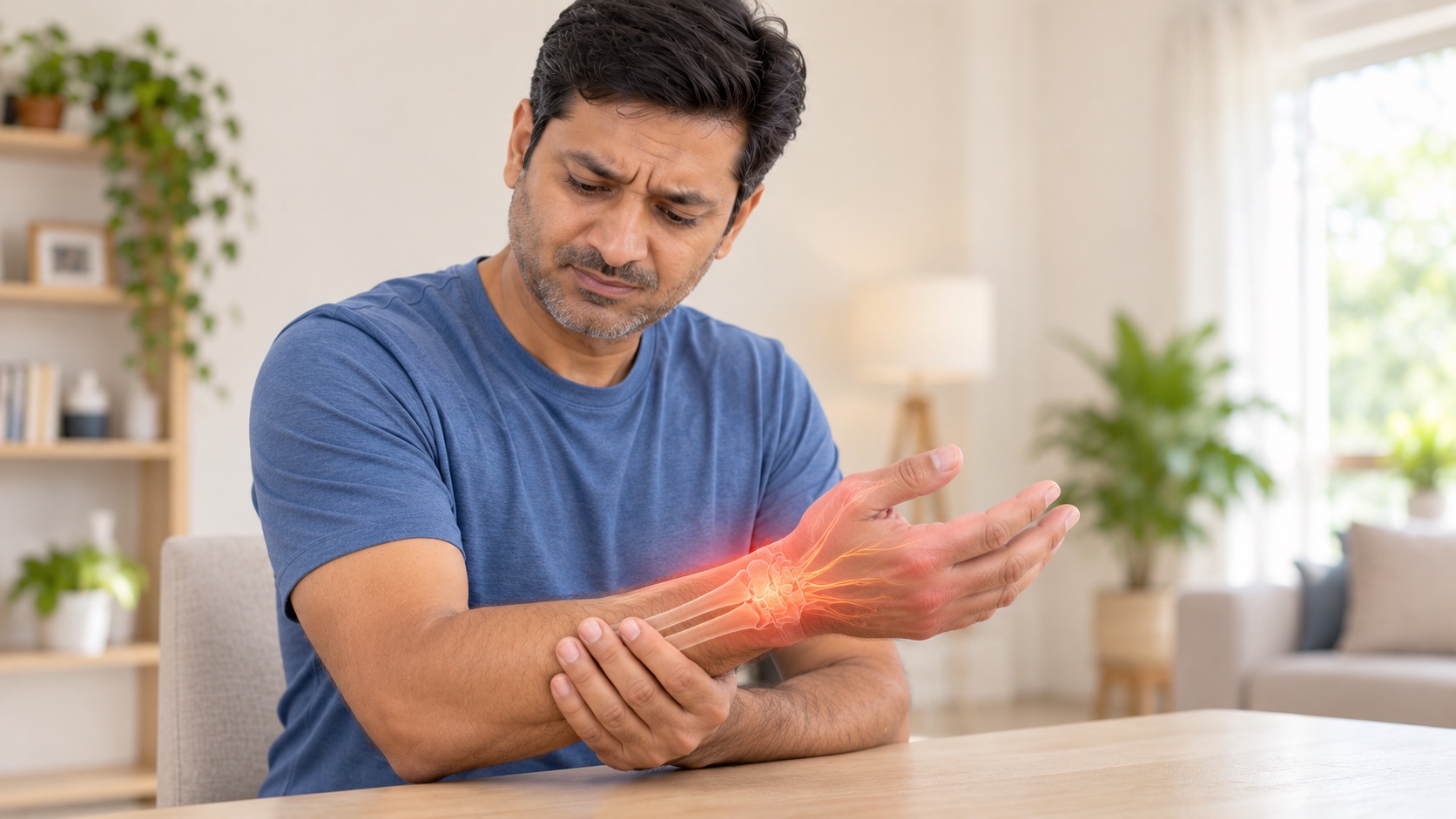
The injury is healing, but the hand still burns. A sleeve brushing the skin feels painful, the fingers are stiff and the affected side sometimes looks or feels different from the other. Complex regional pain syndrome, or CRPS, is one possible explanation. It is not the only one: infection, circulation problems and ongoing injury must also be considered. Prompt assessment is more useful than either dismissing the symptoms or assuming the worst.
On this page
What Is Complex Regional Pain Syndrome?
CRPS is a persistent pain condition usually affecting a limb, often after a fracture, operation, sprain or another injury. The pain is greater or lasts longer than would be expected from the usual course of the original injury, and can occur with sensory, skin and movement changes.
The mechanisms are complex and not fully understood. Changes in inflammation, nerve signalling and the regulation of blood flow may contribute. Symptoms are real even when a routine scan does not provide a complete explanation.
CRPS type 1 is diagnosed without a confirmed major nerve injury; type 2 involves an identified nerve injury. This distinction does not by itself measure how severe the pain is or determine the whole treatment plan.
Which Symptoms Should You Describe?
Pain can be burning, stinging or severe and persistent. Light contact may hurt, a response called allodynia. Some people notice swelling, a difference in skin colour or temperature, altered sweating, stiffness or difficulty using the affected limb.
The appearance can vary over time. One photograph or one normal-looking day does not explain the full pattern. Describe changes you have actually noticed rather than repeatedly provoking them to check whether they are still present.
- Explain what light touch, movement and normal tasks feel like.
- Report swelling, sweating, colour or temperature differences.
- Mention stiffness, shaking, reduced movement or changes in skin, hair or nails.
- Bring the original injury or operation details and any restrictions from the treating team.
When Is It Something That Needs Urgent Care?
Increasing pain after injury is not automatically CRPS. A tight cast, infection, a new fracture problem or impaired blood supply may require urgent treatment. New severe pain, rapidly increasing swelling, fever, wound discharge or a cold, pale or blue hand or foot warrants prompt assessment.
If you have a cast or splint and develop worsening pain, numbness or cold fingers or toes, contact the treating service urgently. Do not wait for a routine pain-clinic appointment or try to cut off a cast yourself.
CRPS can coexist with other problems. A previous diagnosis should not prevent assessment of a new symptom that differs from the familiar pattern.
How Is CRPS Diagnosed? Understanding the Budapest Criteria
There is no single blood test, X-ray or scan that confirms every case. Clinicians use the history, examination and diagnostic criteria while checking for a better explanation. Tests may be selected to investigate infection, injury, circulation or other nerve conditions.
The CRPS practical diagnostic and treatment guidelines describe the Budapest criteria. These consider continuing disproportionate pain, symptoms reported in several categories and signs observed during examination, with no better diagnosis explaining the findings.
The categories include sensation, skin colour or temperature, swelling or sweating, and movement or tissue changes. This is a clinical framework, not a home checklist. Burning pain alone or a single colour change is insufficient to establish CRPS.
Why Rehabilitation Is Central to Treatment
Treatment commonly combines education, physical or occupational rehabilitation, symptom relief and support for the emotional impact. The aim is to restore useful function gradually while addressing barriers such as pain, fear, swelling and stiffness.
A therapist may begin with a small amount of tolerated movement, careful touch-based desensitisation or strategies for swelling, depending on the examination and injury restrictions. The plan should be individual and coordinated with the team treating the original injury.
Neither prolonged avoidance of every movement nor forceful treatment through severe pain is a universal solution. Ask what amount to start with, how to adjust after a flare and which response means you should seek review. Follow any specific surgical or fracture precautions.
What Are Mirror Therapy and Graded Motor Imagery?
Specialist rehabilitation may include mirror therapy or graded motor imagery. These use approaches such as recognising left and right body images, imagined movement or a mirror reflection to work with movement and sensory processing.
They are options to discuss with a trained therapist rather than tests you need to pass. Benefit is not guaranteed, and the sequence and amount may need adjustment. Tell the therapist if a technique increases symptoms or is difficult to follow.
Choose a functional target such as using cutlery, wearing a sock or touching a keyboard. A programme is easier to review when it is linked to a meaningful task rather than only completing an exercise list.
Medicines and Psychological Support Have Specific Roles
A clinician may consider medicines used for nerve pain or other selected treatments according to symptoms, timing, health and other medicines. Ask what the drug is intended to improve and how benefit and side effects will be assessed. Do not start, stop or increase medicines without a plan.
Psychological support can help with distress, disrupted sleep and fear of movement. Offering this support does not mean that the condition is imagined. It can be part of the same plan as physical rehabilitation and medical care.
Our guide to talking to a doctor about pain can help you prepare. Include what you can no longer do, what you fear will happen with movement and which treatments have already helped or caused problems.
Do Nerve Blocks or Stimulation Cure CRPS?
Specialists sometimes consider selected procedures when pain remains difficult despite coordinated care. A block should have a clear purpose, with realistic expectations about benefit, risks and whether it will help participation in rehabilitation. A response to one block does not prove every part of the diagnosis.
A 2023 Cochrane overview of CRPS treatments found substantial limitations in the evidence for many interventions. It found that local-anaesthetic sympathetic blocks probably do not reduce pain intensity compared with placebo. A procedure should not be advertised as a reliable cure.
Spinal cord or dorsal root ganglion stimulation may be discussed for selected persistent cases by a specialist team after careful assessment. These involve additional decisions about a trial, possible implantation, follow-up and risks. They are not routine first steps after an injury.
How Long Does Recovery Take, and What Should You Track?
The course varies. Some people improve substantially, while others need longer-term care. Early recognition supports timely treatment, but no clinician can promise exactly when symptoms will resolve. A flare does not automatically mean fresh damage; new warning signs still need assessment.
Track one or two practical measures, such as tolerating a sleeve, opening the hand or walking a familiar short distance. Discuss the trend at an agreed interval and review the plan if progress stalls. Daily function, sleep and treatment burden matter alongside pain scores.
For a Jain Pain Clinic consultation, bring injury records, current medicines and previous investigation results. Ask who will coordinate rehabilitation, medical treatment and the original injury care. A useful plan gives each step a purpose and explains when to seek earlier help.
Resources
- CRPS: overview and timely assessmentNHS
- CRPS: symptoms and physical changesNHS
- CRPS: diagnosis and excluding other conditionsNHS
- CRPS: rehabilitation, medicines and specialist treatmentsNHS
- CRPS: possible causes and mechanismsNHS
- CRPS practical diagnostic and treatment guidelines, fifth editionPain Medicine, 2022
- Treatments for adults with CRPS: overview of systematic reviewsCochrane, 2023
Frequently asked questions
Does burning pain after a fracture mean I have CRPS?
Not necessarily. Ongoing injury, a cast problem, infection and other nerve or circulation conditions must be considered. CRPS is diagnosed through a clinical assessment.
Can CRPS happen without a confirmed nerve injury?
Yes. CRPS type 1 does not require an identified major nerve injury. Type 2 involves a confirmed nerve injury; both need individual assessment.
Will a scan prove or rule out CRPS?
No single scan confirms or excludes every case. Investigations are selected to answer specific questions and check other explanations.
Should I avoid using the painful limb completely?
Follow any injury restrictions, but prolonged avoidance is not a universal treatment. A therapist can guide gradual use matched to your condition and response.
Does psychological support mean the pain is imagined?
No. It can help with the real distress, sleep disruption and fear that accompany persistent pain, alongside rehabilitation and medical treatment.
Can a sympathetic nerve block guarantee recovery?
No. Evidence is limited and a block is not a reliable cure. Ask about the purpose, evidence, risks and alternatives before any procedure.