
 Dr Ashu Kumar Jain
Feet with gangrene need urgent medical attention because tissue in the toes or foot may be dying from severely reduced blood flow, infection, or both. In diabetes, a black toe, a diabetic foot ulcer, or a foot wound not healing can become serious quickly, especially when there is cold skin, foul smell, swelling, numbness, or severe pain at rest.
Bottom Line First: When Are Feet with Gangrene Urgent?
Seek urgent medical care if a toe or part of the foot is turning black, blue, purple, grey, or unusually pale; if a diabetic foot ulcer smells bad or leaks pus; if there is fever or chills; or if severe foot pain appears at rest or at night.
People with diabetes, smokers, peripheral artery disease, kidney disease, or reduced sensation in the feet should be especially cautious. In these groups, a small wound can become serious quickly because pain may be reduced even while tissue damage is progressing.
The first priority is to assess infection, blood flow, tissue viability, and whether urgent vascular or surgical treatment is needed. Pain relief matters, but feet with gangrene need cause-focused evaluation first.
What Does Feet with Gangrene Mean?
Gangrene means body tissue has started to die. In the foot, this most often involves the toes, heel, forefoot, or areas around a diabetic foot ulcer or infected wound.
The common pathway is poor oxygen delivery. This may happen because arteries are blocked, because infection has damaged tissue, or because diabetes has reduced both blood flow and protective sensation.
A black toe or black patch on the foot is a late warning sign, but the process often begins earlier with pain, coldness, colour change, numbness, swelling, or a foot wound that refuses to heal.
Early Warning Signs People Often Miss
Feet with gangrene do not always begin dramatically. In some patients, the first sign is a small cut, blister, nail injury, shoe bite, or cracked skin that does not heal.
Pain may be severe when circulation is poor, but diabetic neuropathy can hide pain. This is why a painless black toe in a diabetic patient can still be dangerous.
Watch for changes in colour, temperature, smell, discharge, and sensation. A foot that looks different from the other side deserves attention.
- Black, blue, purple, grey, bronze, or unusually pale skin
- A toe or foot that feels cold compared with the other side
- A wound, ulcer, blister, or nail infection that is not healing
- Foul smell, pus, wet discharge, or rapidly increasing swelling
- Severe burning, throbbing, or rest pain, especially at night
- Numbness, loss of sensation, or pain that suddenly becomes less noticeable
- Fever, chills, weakness, confusion, or feeling generally unwell
Dry Gangrene vs Wet Gangrene in the Foot
Dry gangrene usually happens when blood flow reduces gradually. The affected area may become dry, shriveled, cold, and dark. It is often linked to peripheral artery disease, diabetes, smoking-related vascular disease, or Buerger's disease.
Wet gangrene means dead or dying tissue is infected. The foot may look swollen, blistered, wet, red, warm, draining, or foul-smelling. Wet gangrene can spread quickly and is an emergency.
Patients often search for images of feet with gangrene, but appearance alone is not enough. A doctor must examine blood flow, infection, sensation, pulses, and the depth of tissue damage.
Why Diabetic Foot Ulcers Can Progress to Gangrene
Diabetes can damage nerves and blood vessels in the feet. Nerve damage reduces pain sensation, so a wound may go unnoticed. Poor blood flow makes healing slower and makes infection harder to control.
When infection and poor circulation occur together, the risk rises sharply. A small diabetic foot ulcer can deepen, involve surrounding tissue, and progress toward gangrene if it is not treated early.
If burning, tingling, numbness, or night-time foot pain is also present, read our guide on painful diabetic neuropathy because nerve damage can hide injuries while also creating severe pain.
Is There a Cure for Diabetic Foot Ulcers?
Many patients search for a cure for diabetic foot ulcers, but the honest answer depends on blood flow, infection, pressure on the wound, diabetes control, nerve damage, and how much tissue is already damaged.
Some diabetic foot ulcers can heal with early wound care, pressure offloading, infection control, blood-sugar management, and treatment of blocked circulation. If gangrene has already developed, the plan may also involve removal of dead tissue, vascular treatment, surgery, and pain management.
The most important step is not to keep trying dressings at home while the wound worsens. A diabetic foot ulcer that is black, spreading, foul-smelling, painful at rest, or not healing needs prompt assessment.
Smoking, Buerger's Disease, and Poor Blood Flow
Smoking can narrow and inflame blood vessels, reducing oxygen supply to the toes and feet. In Buerger's disease, tobacco exposure is strongly linked to inflammation and blockage of small and medium blood vessels.
This can cause cold feet, colour change, walking pain, rest pain, non-healing wounds, and in severe cases tissue death.
For a deeper explanation of smoking-related foot pain, see our blog on smoker's foot and cold painful feet which explains how vascular pain can be mistaken for routine foot pain.
Why Feet with Gangrene Can Hurt So Much
Gangrene-related pain is often a mix of ischemic pain, inflammatory pain, and nerve pain. Ischemic pain happens when tissues are starved of oxygen because blood flow is poor.
Patients may describe burning, throbbing, deep aching, electric pain, or severe night pain. In advanced tissue death, sensation may reduce, but pain around the edge of the damaged tissue can remain intense.
Pain control matters, but pain relief alone is not enough. The underlying blood flow, infection, and tissue damage must be assessed urgently.
Does Gangrene Always Mean Amputation?
No, but it can if the tissue is dead, infection is spreading, or blood flow cannot be restored. The earlier the problem is evaluated, the better the chance of saving as much healthy tissue as possible.
Treatment may involve antibiotics, wound care, removal of dead tissue, restoring blood flow through vascular procedures, or surgery when tissue cannot be saved.
The key is not to wait until the foot becomes black or foul-smelling. Earlier stages may offer more options.
Where Interventional Pain Management Fits In
A pain specialist does not replace vascular surgeons, diabetologists, wound-care specialists, or emergency care. In feet with gangrene, the first question is always whether urgent infection control, blood-flow restoration, or surgery is needed.
Interventional pain management becomes important when ischemic pain, Buerger's disease, diabetic foot pain, or peripheral vascular pain remains severe despite basic care, or when improving microcirculation may support limb-preservation planning in selected patients.
At Jain Pain Clinic, the Gangrene and Diabetic Foot pain management page explains procedures such as lumbar sympathetic block, chemical sympathectomy, and spinal cord stimulation in more detail.
How Doctors Usually Evaluate the Foot
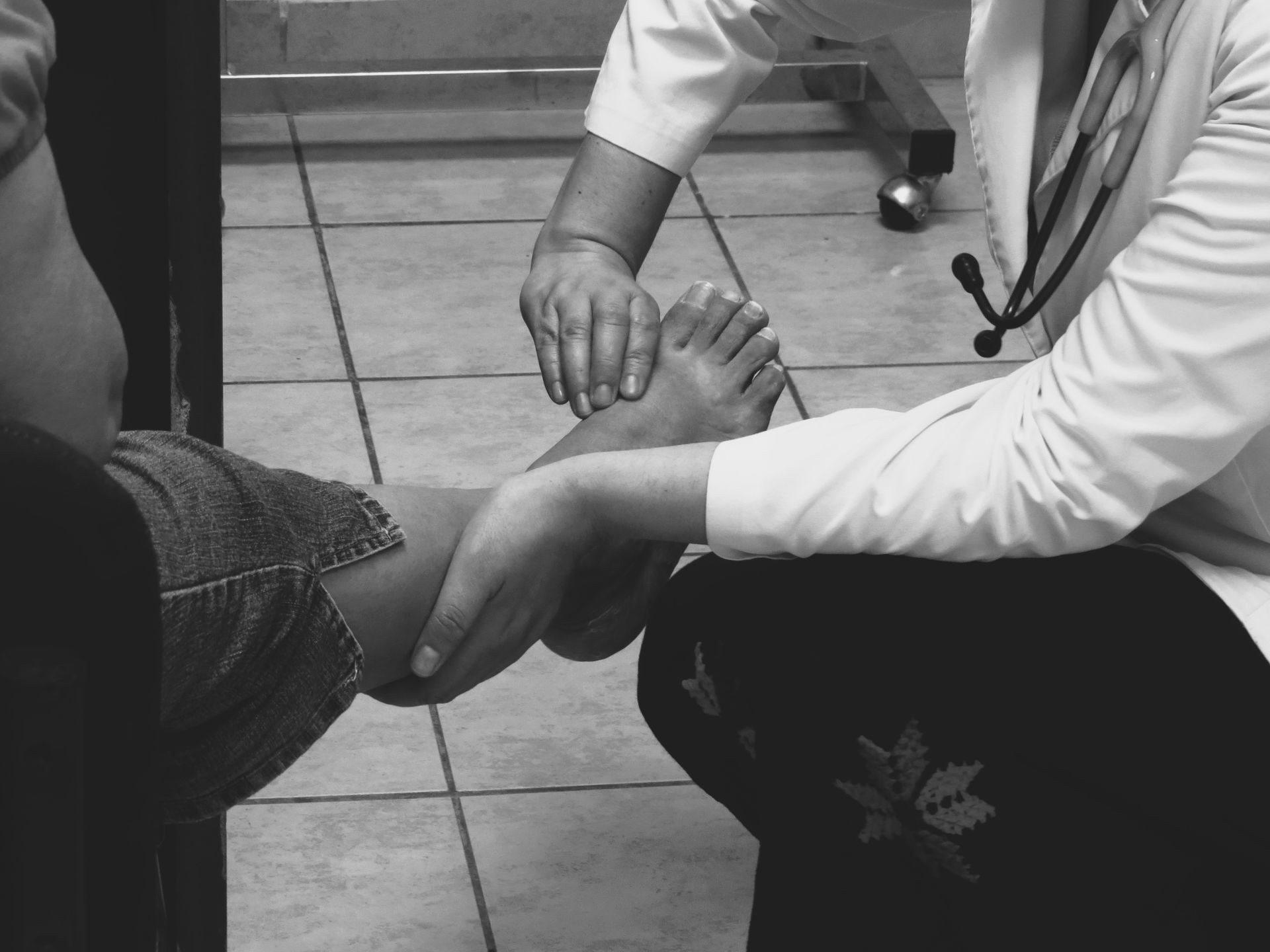
Evaluation usually begins with the appearance of the foot, wound depth, smell, discharge, temperature, pulses, capillary refill, sensation, and whether the patient has fever or systemic illness.
Tests may include blood sugar assessment, infection markers, wound culture, X-ray if bone infection is suspected, Doppler ultrasound, ankle-brachial index, CT angiography, or other vascular studies depending on severity.
The goal is to answer four questions quickly: Is there infection? Is blood flow reduced? Is any tissue dead? Is the limb or life at risk?
What Not to Do at Home
Do not cut away black tissue, drain blisters, apply harsh chemicals, use heating pads on a numb foot, or delay care while trying home remedies.
Do not walk barefoot if you have diabetes or reduced sensation. Do not ignore a shoe bite, nail injury, blister, or wound that is changing colour.
If there is blackening, foul smell, pus, fever, rapidly worsening pain, or a cold pale foot, seek urgent care.
Getting the Right Help Early
If you are dealing with severe foot pain, diabetic foot pain, Buerger's disease, non-healing wounds, or circulation-related pain, early evaluation matters. Dr Ashu Kumar Jain at Jain Pain Clinic in Gurugram focuses on chronic pain specialist care, interventional pain management, palliative care support, and advanced pain procedures for complex vascular and neuropathic pain.
Patients searching for a chronic pain clinic, pain specialist in Delhi NCR, or an interventional pain management specialist should remember that feet with gangrene may need urgent vascular or surgical care first. Once emergency issues are addressed, a pain specialist can help manage severe ischemic pain and support recovery planning.
The Takeaway
Feet with gangrene are a serious warning sign, not a routine foot pain problem. Blackening, coldness, foul smell, pus, swelling, fever, severe rest pain, or a non-healing diabetic foot ulcer needs prompt medical attention.
Diabetes, smoking, Buerger's disease, peripheral artery disease, and neuropathy increase risk because they damage blood flow, sensation, or both.
Outcomes can improve with early recognition, urgent evaluation, and coordinated care between vascular, surgical, diabetes, wound-care, and pain-management specialists.
Resources
- Gangrene: Symptoms, Causes, and TreatmentCleveland Clinic
- GangreneNCBI Bookshelf
- Diabetic FootMedlinePlus
- Your Feet and DiabetesCDC
Frequently asked questions
What are the first signs of feet with gangrene?
Early warning signs may include a non-healing wound, cold skin, colour change, severe rest pain, numbness, swelling, discharge, or a toe that looks blue, purple, grey, or black. In diabetic patients, pain may be reduced even when the problem is serious.
Is a black toe always gangrene?
No, but a black toe should be evaluated urgently, especially in diabetes, smokers, or people with poor circulation. Bruising, injury, infection, arterial blockage, and gangrene can sometimes look similar without examination.
Is there a cure for diabetic foot ulcers with gangrene?
Some diabetic foot ulcers can heal if they are identified early and blood flow, infection, pressure, diabetes control, and wound care are managed effectively. If gangrene has developed or infection is spreading, removal of dead tissue or amputation may be needed to protect the patient.
What is the difference between dry and wet gangrene in the foot?
Dry gangrene is usually linked to poor blood flow and may look dry, shriveled, cold, and dark. Wet gangrene involves infection and may cause swelling, blisters, pus, foul smell, redness, warmth, fever, or rapid worsening. Wet gangrene needs emergency care.
Why does gangrene pain get worse at night?
Night or rest pain can happen when blood flow is so poor that tissues do not get enough oxygen even when the foot is not active. It can also be mixed with nerve pain in diabetes or Buerger's disease.
Which doctor should I see for feet with gangrene?
If gangrene is suspected, urgent medical evaluation is needed. Care may involve emergency medicine, vascular surgery, general surgery, diabetology, wound care, infectious disease, and pain management depending on the cause and severity.
Can a pain specialist help with gangrene foot pain?
Yes, but only as part of coordinated care. A pain specialist may help manage severe ischemic, neuropathic, or vascular pain after urgent infection and blood-flow issues are assessed. Procedures such as sympathetic blocks may be considered in selected patients.