
 Jain Pain Clinic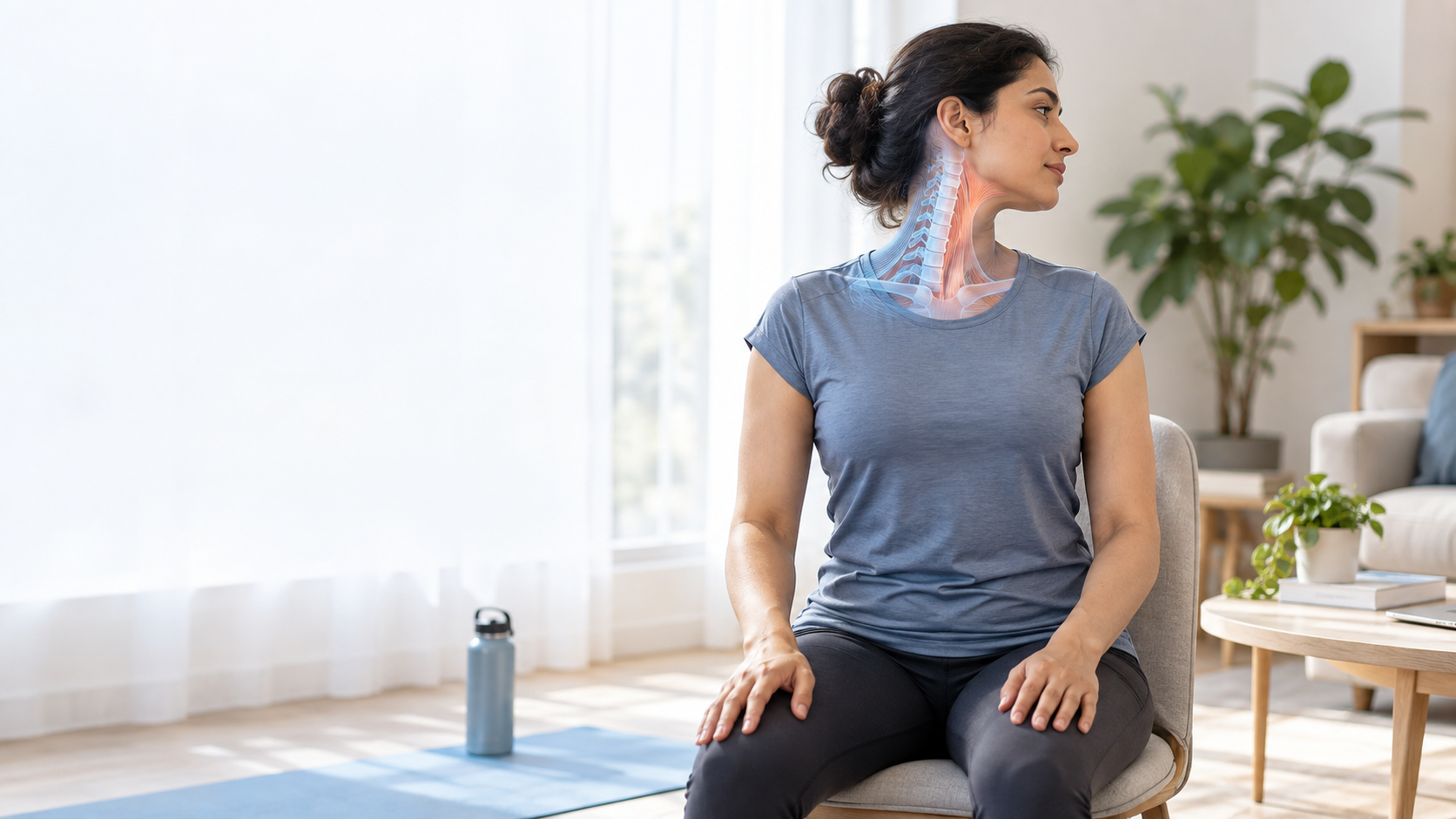
Neck pain exercises can help movement and strength when the routine matches the problem. For mild muscle or joint-related stiffness, gentle movement is often a reasonable starting point. The aim is to move more comfortably, not force the neck through pain. If you have had a significant injury, worsening arm symptoms, weakness or problems with balance, get assessed before trying a general exercise routine.
On this page
Who Is This Exercise Guide For?
This guide is for adults with mild, familiar neck stiffness who have not been told to restrict movement. It is not a rehabilitation programme for a recent fracture, surgery, suspected spinal instability or spinal-cord compression. Those situations need individual instructions.
A useful starting question is what you want movement to make easier. It might be turning to speak to someone, working comfortably at a desk or looking over your shoulder. Choose an everyday task you can describe clearly. That gives an exercise programme a purpose beyond completing repetitions.
When Should You Get Help Before Exercising?
Do not use stretching to test whether a worrying symptom will go away. Seek urgent medical assessment for new or worsening weakness, clumsy hands, difficulty walking or changes in bladder or bowel control. Severe pain after an accident, or fever with marked neck stiffness, also needs urgent care.
- Have existing arm pain, numbness or tingling assessed before choosing a neck routine.
- Follow your own clinician's restrictions after surgery or a diagnosed injury.
- Stop if movement brings on dizziness, faintness, new visual symptoms or an unusual severe headache; seek medical advice rather than repeating the movement.
Begin With a Small, Comfortable Amount
The NHS inform exercise guide suggests beginning with two or three repetitions at a time. Use a small, comfortable range and see how you feel afterwards before adding more. A stretch should not leave your neck worse overall or worse the following morning.
You do not need to complete every movement below. Start with one or two that feel manageable. Keep breathing normally and let the shoulders relax. If you find yourself holding your breath or bracing your whole body, reduce the effort rather than trying to finish the set.
Gentle Neck Rotation
Sit comfortably and look ahead. Slowly turn your face towards one side, keeping the movement within an easy range. Return to the centre, then try the other side. Keep the shoulders facing forwards instead of twisting the whole upper body.
There is no need to reach the same distance on both sides immediately. Notice whether the movement becomes easier without provoking symptoms. Do not use your hand to push the chin farther around, and stop if pain starts travelling into the arm.
Gentle Side Tilt
With your face pointing forwards, slowly bring one ear towards the shoulder on that side. Keep the shoulder relaxed rather than lifting it to meet the ear. Return to the middle and repeat towards the other side if comfortable.
A light stretching sensation at the side of the neck is different from a sharp pinch or spreading pain. Keep this a small movement at first. Pulling on the head to make a stronger stretch is unnecessary for this beginner routine.
A Comfortable Forward Nod
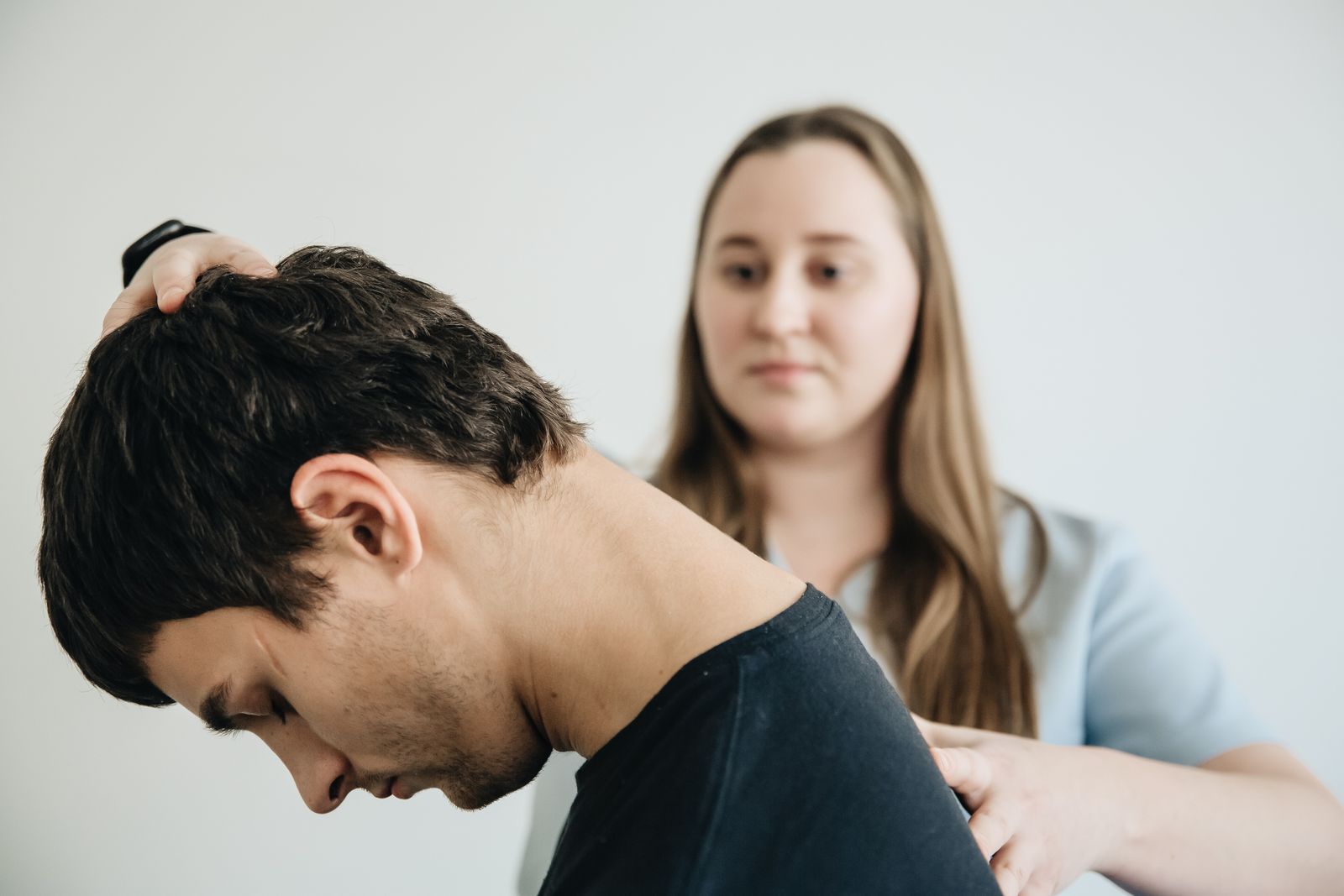
From a relaxed sitting position, gently lower the chin towards the chest, only as far as feels comfortable. Return to your starting position slowly. Avoid letting the weight of your head pull you into a forceful stretch.
Some neck problems do not tolerate bending forwards well. If this movement reproduces your familiar arm symptoms or makes the neck noticeably worse, leave it out and discuss the response with a physiotherapist. One uncomfortable direction does not mean that all movement is harmful.
When Can You Add Chin Retraction or Strengthening?
A chin retraction is a small backwards glide of the head while the eyes remain level. It is different from bending the chin down or tipping the head back. Kaiser Permanente's exercise guide describes this movement and resistance exercises, but suitability should be checked with your clinician.
Strengthening may include gentle resistance without moving the head, or exercises for the shoulder blades and upper back. Ask for a demonstration and a starting dose matched to your ability. Stronger resistance is not a shortcut if you cannot maintain a comfortable position with light effort.
Keep mobility and strengthening as separate parts of the plan. You might tolerate a few comfortable turns during a desk break while doing a more structured strengthening session at another time. A physiotherapist can help you choose that balance.
| What you notice | A sensible next step |
|---|---|
| Comfortable movement or a mild stretch that settles | Keep the same small dose initially; check your response later. |
| Local discomfort increasing with each repetition | Pause, reduce the range or stop that movement. |
| Pain spreading into the arm or new tingling | Stop the provoking exercise and seek advice. |
| New weakness, walking difficulty or clumsy hands | Seek urgent assessment rather than continuing the routine. |
Build a Routine Around Your Working Day
A routine that fits your day is more useful than an ambitious programme that is repeatedly abandoned. Try linking a short movement break to a normal transition, such as finishing a call or getting a drink. You do not have to wait until your neck feels very tight.
Bring the screen into a comfortable viewing position and support your arms where practical. With a laptop, a separate keyboard can make it easier to raise the screen without raising the shoulders. Vary your position rather than trying to hold one rigid posture all day.
If driving is uncomfortable, discuss whether restricted turning affects your ability to check traffic safely. Turning exercises are not a substitute for making a safe decision about driving.
What Should You Avoid?
Avoid bouncing into stretches, forcing a painful range or repeatedly trying to crack the neck. Large neck circles combine several directions and can be difficult to control when the neck is irritable. Small, separate movements make it easier to identify what you tolerate.
Do not copy a resistance-band, weighted-neck or traction routine simply because it is labelled cervical pain relief. The diagnosis and starting ability matter. Stop using any exercise as a way to push through new neurological symptoms.
Use a Simple Exercise Log
Write down the movement, the number of repetitions and how you felt during it. Add a short note later that day and the following morning. Record a functional change too: for example, whether looking to the side while talking felt easier.
Change one part of the routine at a time. If you increase the repetitions, the range and the resistance together, it becomes difficult to know which change caused a flare. Bring your notes to an appointment if the routine is not helping; they are more useful than simply reporting that all exercise failed.
When Stretching Is Not Enough
Repeated short-term relief does not always mean the programme is addressing the whole problem. Sleep, work demands, strength, exercise technique and the diagnosis may all need review. A different programme may be more helpful than repeatedly adding stronger stretches.
If neck pain keeps returning or limits work and sleep, read our guide to neck pain treatment without surgery . If a scan mentions degeneration, the cervical spondylosis treatment guide explains how that finding relates to your symptoms.
Getting the Right Assessment
For persistent symptoms, consider an assessment for neck pain treatment in Gurgaon at Jain Pain Clinic. Dr Ashu Kumar Jain's pain-medicine assessment can help clarify the source and how rehabilitation fits into treatment.
Tell the clinician which activities matter to you, what you tried and what happened afterwards. The next step should make the programme more specific to your needs. The goal is comfortable, useful movement that you can build on.
Resources
- Exercises for neck muscle and joint problemsNHS inform
- Neck exercises and strengtheningKaiser Permanente
- Cervical spondylosis: symptoms and when to seek helpNHS
- Cervical radiculopathy: pinched nerveAAOS OrthoInfo
Frequently asked questions
Can I do neck pain exercises every day?
Gentle movements may fit into a daily routine when they are comfortable. Strengthening frequency depends on the programme. Follow your own instructions and reduce or stop movements that leave symptoms worse.
Should I stretch if pain travels down my arm?
Get advice about the cause and suitable movements. Do not continue an exercise that increases radiating pain, tingling or numbness. New or worsening weakness needs urgent assessment.
Can exercises cure cervical spondylosis?
Exercise may improve strength, movement and symptoms. It does not remove age-related changes seen on a scan. Progress is better judged by daily function than by expecting the scan to become normal.
Are neck circles better than gentle turns?
Not necessarily. Separate, controlled movements are easier to adjust when the neck is sensitive. Avoid large circles that provoke pain or dizziness.
How quickly should neck exercises help?
The response depends on the cause and programme. Agree a review point with your clinician rather than relying on a fixed recovery promise. Worsening neurological symptoms need earlier assessment.
What if I feel worse the next morning?
Reduce the amount or stop the provoking movement and seek advice if symptoms persist. Record which exercise you did and its dose so the programme can be adjusted.