
 Jain Pain Clinic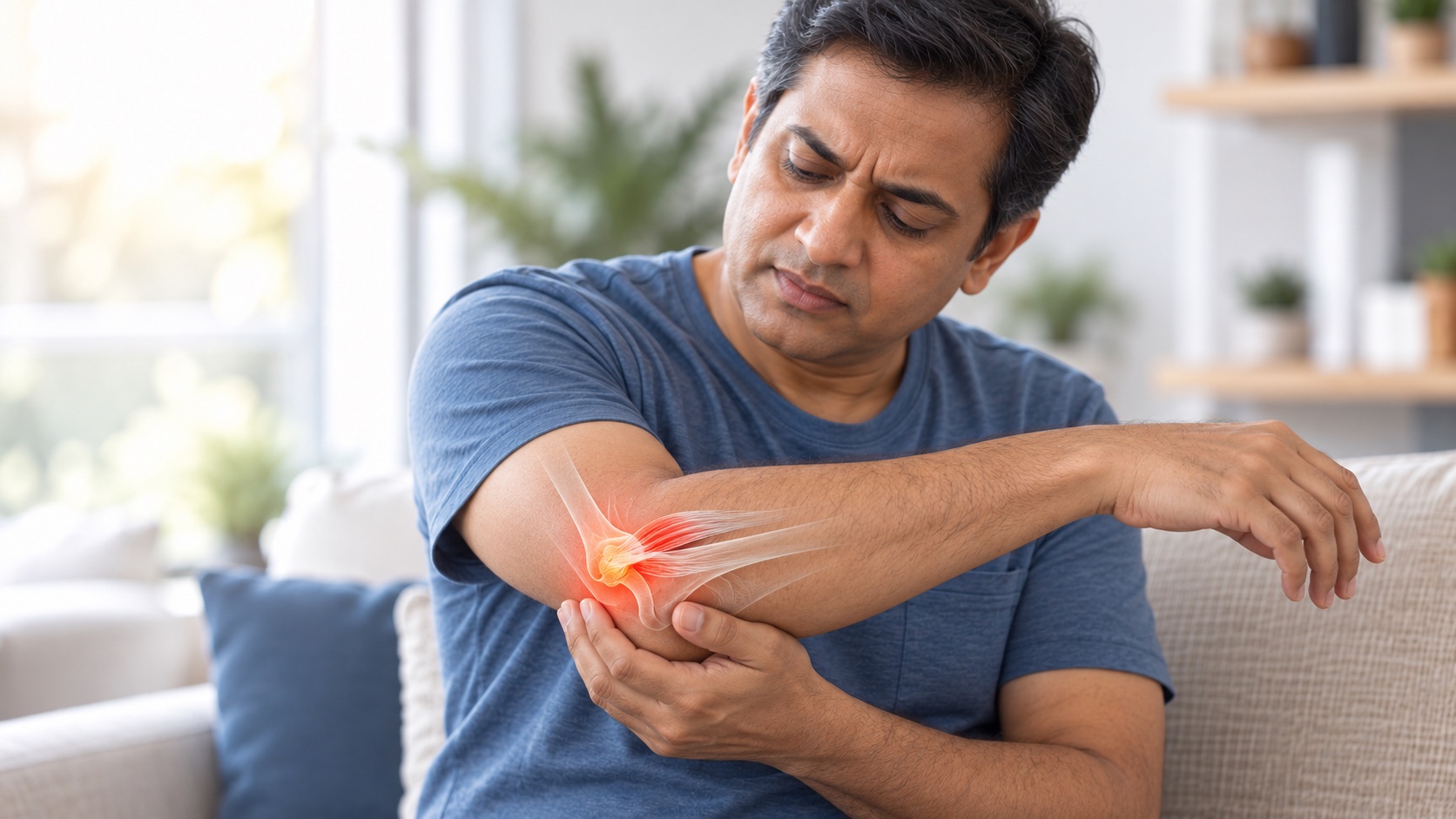
A cup feels surprisingly heavy. Opening a jar brings a sharp ache outside the elbow, and carrying a shopping bag becomes uncomfortable. Tennis elbow is one possible cause, even if you have never held a tennis racket. Treatment usually begins with understanding the symptom pattern, adapting painful tasks and gradually rebuilding tolerance. An injection is not automatically the next step, and symptoms such as numbness, major swelling or pain after an injury need a different assessment.
On this page
What Is Tennis Elbow?
Tennis elbow, also called lateral epicondylitis or lateral elbow tendinopathy, affects the tendons connecting the wrist-extensor muscles to the outer part of the elbow. These muscles help lift the back of the hand and stabilise the wrist during gripping. This explains why a task involving the hand can hurt farther up the arm.
Although the name ends in ‘itis’, persistent cases involve tendon changes rather than simply ongoing inflammation. Repeated loading can contribute, but symptoms do not always follow a single obvious injury. The condition is different from a fracture or a tendon that has completely snapped.
Common Tennis Elbow Symptoms
The typical pattern is tenderness or pain around the bony prominence on the outside of the elbow. Pain may extend into the forearm, and gripping can feel weaker because it hurts. Symptoms often develop gradually and may become noticeable during everyday tasks.
Describe which activity causes trouble rather than repeatedly testing your maximum grip. For example, say whether lifting an empty cup is comfortable but a full kettle is painful. That gives your clinician a practical starting point.
- Pain when carrying a bag or lifting something with the wrist held back.
- Discomfort when opening a jar, turning a tool or wringing a cloth.
- Tenderness outside the elbow, sometimes with an ache down the forearm.
- Difficulty with gripping tasks, and sometimes pain that disturbs sleep.
Can You Get It Without Playing Tennis?
Yes. Work, household tasks, gardening, musical instruments and gym training can all involve repeated gripping or wrist movement. A sudden increase in activity may be relevant: a new exercise routine, several days of painting or longer sessions using tools.
Computer work can also aggravate symptoms in some people, but using a mouse does not prove the diagnosis. Explain how long you work, how your forearm is supported and whether changing the task changes the pain. Avoid blaming one posture without considering the full day's demands.
Is Every Painful Elbow Tennis Elbow?
No. Pain on the inner side may involve a different tendon group, often called golfer's elbow. Arthritis, injury, bursitis and nerve compression can also cause elbow or arm symptoms. An examination helps distinguish these possibilities.
Tingling or numbness is not a typical feature of uncomplicated tennis elbow. Tell your clinician if symptoms extend into particular fingers, if there is neck pain or if strength is genuinely deteriorating rather than limited by pain.
Our guide to hand tingling and carpal tunnel syndrome explains a different pattern of nerve symptoms. Similar descriptions such as ‘burning’ do not mean that every arm pain has the same cause.
How Is Tennis Elbow Diagnosed?
A clinician asks about the onset, painful activities and previous injuries, then checks tenderness, movement and responses to controlled resistance. The diagnosis often comes from this history and examination. Scans are used selectively when the pattern is unusual, another problem is suspected or the result would change treatment.
An MRI is not a compulsory first step. Ask what an X-ray, ultrasound or nerve test is intended to clarify. Bring previous reports and describe what has changed since they were taken; the current symptoms matter as much as the wording on an old scan.
What Can You Change at Home?
Temporarily reduce tasks that repeatedly provoke the pain while keeping comfortable movement. A wrapped cool or warm pack may ease symptoms. Suitable pain relief or an anti-inflammatory gel can help some people, but check with a pharmacist or clinician if you have other health conditions, are pregnant or take other medicines.
Start with the task that is hardest to avoid. A person who cooks daily needs a workable way to handle pans; someone using tools needs a plan for grip force and breaks. Choose changes you can repeat consistently rather than attempting to remove every use of the arm.
- Divide heavier loads and use both hands when comfortable.
- Break up long sessions of gripping or twisting with changes of task.
- For desk work, try comfortable forearm support and reduce unnecessary gripping of the mouse.
- Record one troublesome task so you can judge whether the plan is helping.
Which Tennis Elbow Exercises Are Appropriate?
After the diagnosis is checked, a physiotherapist may suggest gentle elbow movement and progressive wrist and forearm strengthening. The amount should match your current tolerance. More weight or stronger stretching is not automatically better.
The NHS inform tennis elbow exercise guide includes supported wrist movements and advises gradual progression. Exercises should not leave the existing pain worse overall or worse the following morning. Stop and seek advice if they cause new pain or worsening symptoms.
Exercise is a way to rebuild movement and capacity, not a guaranteed quick cure. A 2024 Cochrane review found that exercise and manual therapy may offer small improvements in pain and disability compared with minimal treatment, with uncertain or limited lasting benefit. Agree a review point and adjust the programme if it is not helping.
Does a Tennis Elbow Strap Help?
A forearm strap or suitable brace may reduce discomfort during selected activities. It is an optional aid rather than a treatment everyone needs. Have the fit checked, and loosen or remove it if it causes tingling, swelling or increased pain.
Judge it against a specific task: does it make a normal activity more comfortable? Do not use reduced pain under a strap as a reason to immediately increase training or carry heavier loads. Discuss how the support fits into your activity and rehabilitation plan.
Are Steroid or PRP Injections the Best Treatment?
There is no single best treatment for every patient. Steroid injections can ease symptoms in the short term, but that benefit does not necessarily last. In a randomised trial of chronic tennis elbow, patients receiving corticosteroid injections had more recurrence and worse recovery at one year than those receiving placebo injections. This is a reason to discuss longer-term outcomes before choosing an injection.
Platelet-rich plasma, or PRP, is also offered, but a Cochrane review of PRP and autologous blood injections found little or no clinically important improvement in pain or function compared with placebo. Describing a treatment as ‘regenerative’ does not establish that it will repair your tendon or improve your symptoms.
Ask what benefit is expected, how long it might last, what the risks and costs are, and what the alternatives include. An injection should be a considered decision with a review plan.
How Long Does Recovery Take, and When Is Surgery Considered?
Recovery varies. Some symptoms settle with initial care, while others take months and occasionally continue beyond a year. Improvement is better judged through tasks such as carrying a bag or returning to work than through a promise of recovery within a fixed number of days.
Surgery may be discussed for persistent, disabling symptoms after a substantial trial of non-surgical care, often six to twelve months. Reaching that interval does not make surgery compulsory. The diagnosis, previous treatment, expected benefit and risks still need review.
When Should You Seek Medical Help?
Arrange an assessment if symptoms remain troublesome after a couple of weeks of sensible self-care, or sooner if they affect normal function. Bring details of the tasks that hurt, previous treatments and any numbness or weakness.
Seek urgent care for severe pain with difficulty moving the arm, a deformity or snapping injury, or a swollen elbow with fever or feeling unwell. New numbness or progressive weakness also needs prompt assessment. Sudden arm pain with chest pressure, breathlessness or sweating needs emergency care rather than treatment as tennis elbow.
At a Jain Pain Clinic consultation, describe the activities you want to regain and what you have already tried. The next step should follow the assessment, with clear goals and a follow-up point rather than a sequence of treatments chosen only because the pain persists.
Resources
- Tennis elbow: symptoms and initial careNHS
- Tennis elbow: tendon anatomy and assessmentAAOS OrthoInfo
- Tennis elbow: symptoms and causesCleveland Clinic
- Exercises for tennis elbowNHS inform
- Manual therapy and exercise for lateral elbow painCochrane, 2024
- Corticosteroid injection and physiotherapy: randomised trialJAMA, 2013
- Autologous blood or PRP injection for lateral elbow painCochrane, 2021
- Tennis elbow: treatment and surgical reviewMayo Clinic
- Elbow and arm pain: urgent warning signsNHS
Frequently asked questions
Can I have tennis elbow without playing tennis?
Yes. Work, household tasks and other activities involving repeated gripping or wrist movement can contribute. The symptom pattern and examination establish the diagnosis.
Why does my elbow hurt when I lift a cup?
Gripping and lifting load the forearm muscles whose tendons attach outside the elbow. Tennis elbow is one possible explanation, but injury, joint or nerve problems may need consideration.
Should I keep exercising through tennis elbow pain?
Use a programme matched to your diagnosis and tolerance. Reduce or stop movements that leave symptoms worse overall or the following morning, and seek advice for new or worsening symptoms.
Is a steroid injection a permanent cure?
No. Short-term relief does not guarantee lasting recovery. Trial evidence raises concerns about recurrence and longer-term outcomes, so discuss alternatives and risks before treatment.
Does PRP reliably heal tennis elbow?
That is not established. A Cochrane review found little or no clinically important improvement in pain or function compared with placebo injections. Ask for evidence relevant to the proposed treatment.
Does every patient need a scan or surgery?
No. Many diagnoses are made through history and examination. Tests and surgical review depend on the findings, severity and response to suitable initial care.