
 Dr Ashu Kumar Jain
Knee arthritis usually causes gradually increasing pain and stiffness, while a meniscus tear may cause joint-line pain after a twist or a catching sensation. These clues overlap: age-related tears frequently coexist with arthritis. An examination, and imaging when it will change care, is more reliable than symptoms alone. A knee that remains stuck, cannot bear weight after injury, or becomes hot and severely swollen needs prompt assessment.
On this page
What Is the Difference?
Osteoarthritis affects the joint as a whole, including its smooth cartilage, underlying bone and other tissues. A meniscus tear affects one of the two pads of cartilage between the thigh and shin bones. These pads help distribute load.
The distinction matters because treatment should address the painful problem rather than simply the label on a scan. A recent injury in an otherwise healthy knee is a different situation from a degenerative tear in an arthritic joint.
| Feature | Knee osteoarthritis | Meniscus tear |
|---|---|---|
| Typical onset | Often gradual | May follow a twist or develop gradually |
| Pain and stiffness | Often linked to weight bearing and rest periods | May involve joint-line pain and painful twisting |
| Swelling or catching | Can occur | Can occur; persistent obstruction needs assessment |
| Imaging question | X-ray may help assess arthritis and alignment | MRI may help when an internal injury would change care |
| Treatment direction | Exercise and symptom management; surgery in selected cases | Rehabilitation or orthopaedic care according to the tear and symptoms |
Which Symptom Patterns Offer Clues?
Gradually increasing stiffness and discomfort with everyday weight-bearing can fit arthritis. Pain after a twist, especially with difficulty straightening the knee, can raise concern about a meniscus injury. Neither pattern proves the diagnosis.
A useful comparison is what changed: did the knee become painful during one movement, or has walking distance slowly decreased? Tell the clinician about swelling, catching and whether the knee actually becomes stuck.
- Arthritis: often a gradual change in walking, stairs and stiffness after rest.
- Meniscus injury: may follow twisting, with local joint-line discomfort or catching.
- Both: pain, swelling and restricted movement can overlap.
- Painless clicking alone: does not establish a tear or the need for an operation.
Can You Have Arthritis and a Meniscus Tear Together?
Yes. Meniscal tissue can change with age, and a tear may appear alongside osteoarthritis without a memorable injury. The finding may be relevant, incidental, or one part of a broader joint problem.
An MRI report that mentions both conditions does not tell you which treatment to choose. Ask which findings match your symptoms and which would actually change the plan. This helps avoid treating an image while missing the reason walking is painful.
Does the Location of Pain Tell You Which Condition It Is?
Pain along the inner or outer joint line can occur with a meniscus tear, but arthritis in the same part of the knee can hurt there too. Pain at the front, particularly with stairs or prolonged sitting, may instead involve the kneecap joint. A painful point on its own is therefore a clue to examine, not a diagnosis.
The combination is more informative: where it hurts, whether there was a definite injury, how swelling developed, and which movements are now limited. Mention whether discomfort is mainly during activity, after rest, or at night. If the pain extends from the back or hip, or includes tingling, the clinician may need to investigate a source outside the knee.
Clicking, Catching or a Truly Locked Knee: What Is the Difference?
A painless click during movement is common and does not by itself justify an MRI or an operation. Catching describes a brief interruption or sensation that something catches, after which the knee moves again. Pain and swelling can also make people hesitate to straighten the leg, even without a physical obstruction.
A knee that stays blocked and will not fully straighten is a different problem. A displaced meniscal fragment is one possible cause, but other injuries can also restrict extension. Seek prompt assessment instead of repeatedly forcing the joint straight or testing it with deep squats. Describe what physically happens rather than simply saying “my knee locks”; that distinction helps determine urgency.
Do You Need an X-ray or MRI?
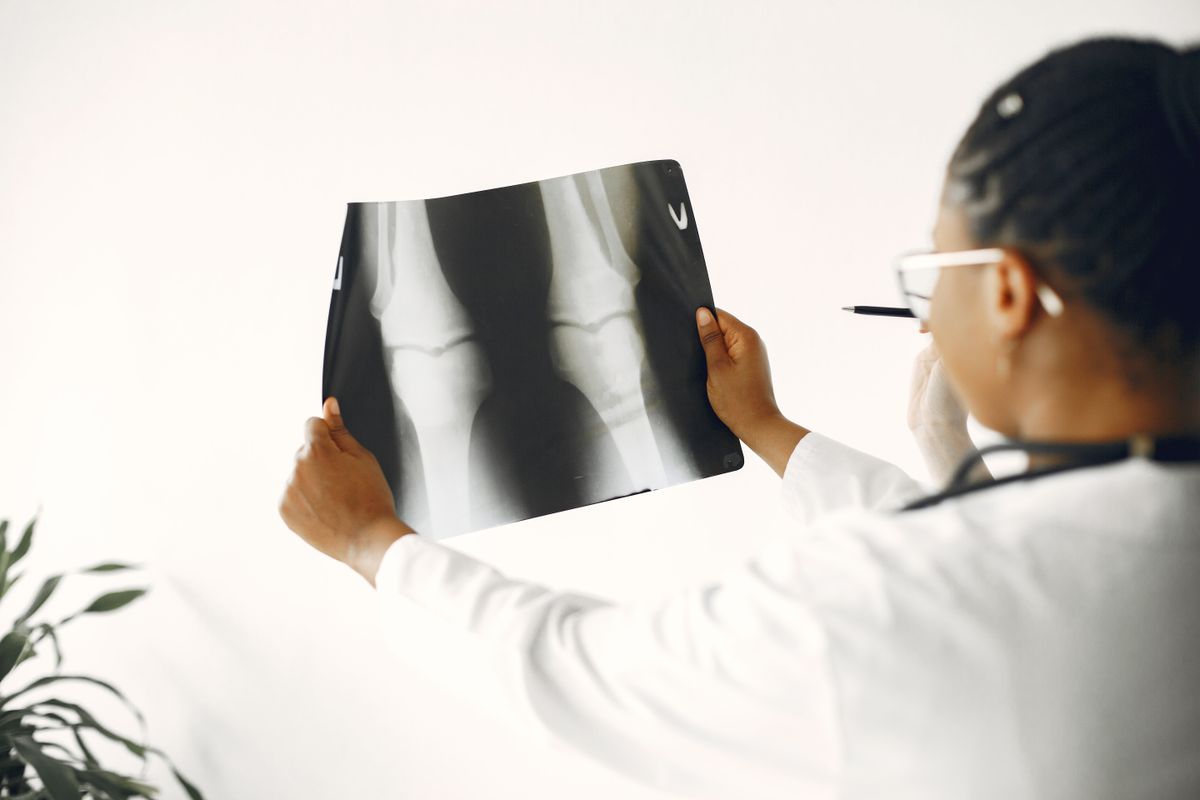
The assessment starts with symptoms, movement, tenderness and stability. X-rays can help show arthritis and alignment. MRI gives more information about structures such as the menisci and ligaments when that information would guide care.
Do not force twisting tests at home to reproduce a click. Pain from the hip or lower back can also be felt around the knee, so the examination may extend beyond the joint.
How Does Treatment Change?
For many stable knees, a plan includes gradual activity changes and knee exercises and stretches matched to the findings. The aim is to restore function, not merely wait for the scan to look normal.
Some acute tears need an orthopaedic opinion about repair or other treatment. Degenerative tears do not automatically require surgery. A knee that is mechanically stuck needs prompt assessment rather than an unsupervised exercise programme.
If arthritis pain persists, compare non-surgical treatment options with the clinician. Nerve procedures may reduce selected arthritis pain but cannot repair a torn meniscus or unlock a mechanically blocked joint.
How Should You Read an MRI Report That Mentions a Tear?
An MRI can identify damaged tissue without proving that it explains today’s pain. In a population study of adults aged 50–90 , 61% of people with a meniscal tear reported no knee pain, aching or stiffness in the preceding month. This finding concerns an older community population; it should not be used to dismiss a new sports injury.
Use the report as the start of a discussion. Does the side and location of the finding match the examination? Is the tear thought to be recent or degenerative? Is there a displaced fragment or another injury that changes the plan? Are arthritis changes sufficient to explain the limitation? These questions are more useful than treating every abnormal word as a separate disease.
Bring the images as well as the written report when available. A recommendation should explain how the history, examination and scan fit together. If the proposed treatment is aimed at arthritis pain, ask what improvement is realistic even though the meniscal finding may remain on future imaging.
What Does Research Say About Physiotherapy Versus Surgery?
The five-year ESCAPE randomised trial found that exercise-based physical therapy was not inferior to arthroscopic partial meniscectomy for knee function in adults aged 45–70 with degenerative meniscal tears. This supports discussing rehabilitation as an initial option for an appropriate stable knee.
The study does not answer every meniscus question. A physically blocked knee, a different acute injury, or a tear being considered for repair requires its own assessment. Trimming degenerative tissue and repairing a repairable traumatic tear are different procedures; evidence about one should not be presented as a verdict on the other.
If surgery is suggested, ask which specific problem it is intended to solve: obstruction, a repairable injury, or persistent symptoms despite an adequate conservative programme. Also ask how accompanying arthritis affects the expected benefit. A promise to remove all knee pain simply by treating a scan finding deserves a clearer explanation.
How Can You Tell Whether Rehabilitation Is Helping?
Before starting, choose two or three everyday measures: comfortable walking time, getting up from a chair, or using a flight of stairs. Record whether swelling appears later that day and whether the knee can straighten. You do not need to repeatedly provoke pain to collect useful information; a brief weekly note is usually more informative than checking the joint after every movement.
Agree with the physiotherapist on a manageable starting load and a review point. A programme should specify the exercises, how to adapt a flare, and how progression will be decided. “I tried exercise” can mean very different things—from a few painful squats to a supervised, adjusted programme—so explain what you actually completed.
Improved function despite an unchanged scan can still represent successful treatment. Conversely, increasing swelling, new giving way, or loss of extension should trigger reassessment rather than simply adding more repetitions. If progress stalls, review the diagnosis, exercise dose, adherence and pain control together before concluding that every non-surgical option has failed.
If Both Conditions Are Present, Which Problem Should Be Treated First?
Consider two illustrative situations, not patient case reports. Someone with months of gradually reduced walking, brief stiffness after sitting and an incidental degenerative tear may begin with a joint-wide arthritis rehabilitation plan. Someone who twists a knee and then cannot straighten it needs prompt evaluation of the new mechanical problem. The same word, “tear”, does not create the same treatment pathway.
A pain-relieving injection can sometimes make exercise more manageable, but relief does not prove that the meniscus was or was not the pain source. Likewise, a nerve procedure cannot restore displaced tissue. If pain improves but the knee remains blocked or repeatedly gives way, that unresolved problem still needs assessment.
Our guide to knee injections: steroid, hyaluronic acid and PRP explains the different aims and evidence. Any procedure should have an agreed functional goal and follow-up plan, rather than serve as a substitute for identifying the cause.
What Should You Ask at the Appointment?
Describe a specific limitation, such as getting out of a car or walking to the shops. A treatment goal is easier to assess when it refers to an activity you want to regain.
- Which examination findings explain my pain?
- Would another scan change treatment?
- Is rehabilitation appropriate, and what would indicate that it is not working?
- Do I need an orthopaedic opinion now, or can we review progress first?
When Should You Seek Urgent Help?
Get prompt medical assessment if the knee is stuck, cannot bear weight after an injury, or becomes rapidly and severely swollen. A hot, painful knee with fever or feeling unwell also needs urgent care.
Getting the Right Assessment
Persistent pain deserves a diagnosis that brings the symptoms and imaging together.
For an individual assessment, explore knee pain treatment in Gurgaon at Jain Pain Clinic. Dr Ashu Kumar Jain focuses on pain medicine; treatment choices depend on the diagnosis and your goals.
Related reading: knee swelling the complete knee pain treatment guide
Resources
- Meniscus tearsAAOS OrthoInfo
- Understanding osteoarthritisAmerican College of Rheumatology
- Knee pain: symptoms and when to seek helpNHS
- Incidental meniscal findings on MRI: population studyNew England Journal of Medicine, 2008
- Physical therapy versus partial meniscectomy: five-year ESCAPE trialJAMA Network Open, 2022
Frequently asked questions
Can an X-ray show a meniscus tear?
An X-ray does not directly show a meniscus tear. It can help assess arthritis or bone injury; MRI may be useful when a suspected tear would change treatment.
Does a meniscus tear always need surgery?
No. The type of tear, symptoms, stability and ability to straighten the knee guide the decision. Some acute tears need surgical assessment, while many degenerative problems start with non-surgical care.
Can arthritis feel like a meniscus tear?
Yes. Pain, swelling and stiffness overlap, and both can be present in the same knee. Symptoms alone are not a reliable way to separate them.
Can I walk with a suspected meniscus tear?
Some people can walk with a tear, so being able to walk does not rule it out. Avoid movements that cause sharp pain or catching, and seek assessment if you limp, develop swelling or cannot straighten the knee. Inability to bear weight after an injury needs prompt care.
Does a degenerative meniscus tear mean my knee is worn out?
No. Degenerative describes changes in tissue over time; it does not measure how much useful function you can regain. Symptoms, strength, movement and arthritis severity help guide treatment. Many people improve function with an appropriate rehabilitation programme.
Is a home twisting test enough to diagnose a tear?
No. A painful home test cannot reliably separate meniscus injury from other knee problems and may aggravate symptoms. Clinical tests are interpreted together with your history and examination, with imaging used when needed.