
 Dr Ashu Kumar Jain
Pain behind the knee can come from a cyst, muscles or tendons, the joint itself, or referred pain. Sudden calf swelling needs urgent assessment because a blood clot can resemble a less serious knee problem.
On this page
First, Check for Symptoms That Cannot Wait
Seek urgent medical assessment for new one-sided calf or leg swelling, warmth or redness, especially if symptoms are worsening. Pain and swelling with chest pain, breathlessness or fainting require emergency care.
A ruptured Baker’s cyst and a deep vein thrombosis can look similar. You cannot safely separate them by pressing the calf, stretching or checking whether you can walk. Do not massage unexplained calf swelling.
Where Exactly Is the Pain?
The back of the knee is different from the area underneath or behind the kneecap at the front. Point to the painful area rather than relying on a phrase from a scan report.
Note whether there is a lump, whether bending feels tight, and whether pain travels into the calf or from the thigh. These details help the clinician decide whether the joint, nearby tissues, nerves or circulation need closer attention.
What the Pain Pattern Can—and Cannot—Tell You
A feeling of fullness that restricts bending can fit a Baker’s cyst. Pain after sprinting, hills or a sudden increase in exercise can lead the examination towards the hamstring or calf attachments. Pain after a twist, especially with catching or loss of extension, raises different questions about structures inside the joint. These patterns guide assessment; none can safely confirm the cause at home.
Pain when straightening the knee is particularly easy to overinterpret. It can stretch irritated tissues, compress a fluid collection, or expose restricted joint movement. It does not identify one specific tendon or prove a meniscus tear. Explain whether you can straighten fully but it hurts, or whether movement actually stops before the knee is straight.
Also separate a new event from a recurring pattern. A familiar mild ache after a long walk and a sudden painful swollen calf are not equivalent even when both are described as “back-of-knee pain”. A previous cyst diagnosis should not lead you to dismiss a new change.
Could It Be a Baker’s Cyst?
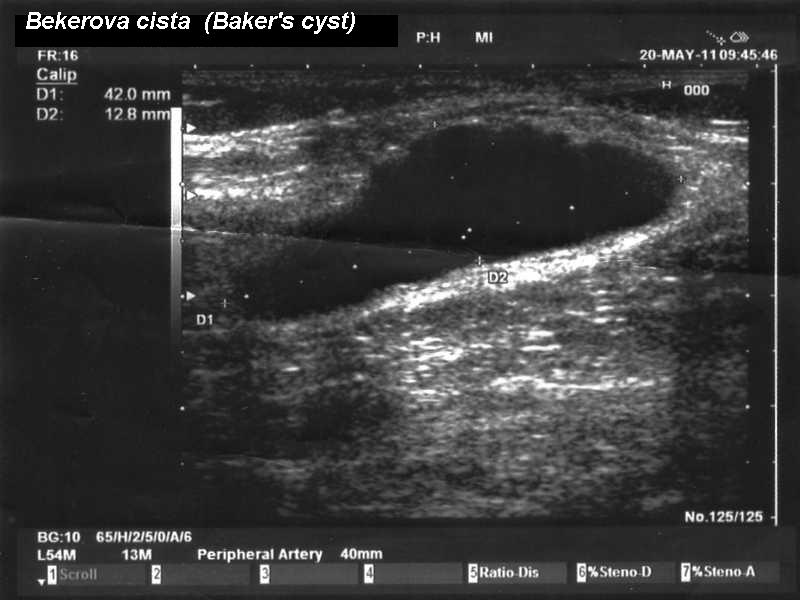
A Baker’s cyst is a collection of fluid at the back of the knee. It may feel like fullness or a lump and can make bending uncomfortable. In adults it can be associated with irritation inside the knee, including arthritis or injury.
A lump still needs assessment rather than an assumption that it is a cyst. If a cyst is confirmed, care often includes addressing the underlying knee problem. Draining fluid is not always necessary, and a collection can return.

Can Muscles or Tendons Cause Pain Here?
The hamstring and calf structures cross or attach near this region. Symptoms after a change in running, hills or exercise may lead the clinician to check these tissues. Location and tenderness alone are not enough to confirm a strain.
Until the cause is clearer, reduce the activity that consistently triggers the pain. Avoid repeatedly stretching into sharp discomfort. A rehabilitation plan should reflect the examination rather than treating every posterior knee pain as a tight hamstring.
Could the Pain Come From the Joint or a Nerve?
Problems inside the joint can sometimes be felt at the back. Read about arthritis and meniscus symptoms if stiffness, catching or an injury are part of the picture.
Pain travelling from the back or buttock, tingling, altered sensation or weakness may prompt examination of the spine and nerves. These features do not prove sciatica, and nerve treatment should not be selected only because pain burns or shoots.
What Tests Might Be Useful?
The clinician checks the knee and leg and asks about injury, travel, immobility, surgery and previous clots. Ultrasound may be useful for a suspected cyst or vascular problem; the type of scan depends on the question being asked.
X-rays or MRI may be considered for joint or soft-tissue problems when the result would change care. Bringing previous reports can help avoid repeating investigations without a clear reason.
How Is Treatment Chosen?
After urgent causes are excluded, care may include activity adjustment, rehabilitation and treatment of an underlying joint problem. Our guide to fluid around the knee explains why the cause of swelling matters.
A pain procedure is not the first answer to an unexplained posterior lump. For persistent pain, ask what diagnosis is being treated, what improvement to expect and what symptoms should trigger reassessment.
Why a Baker’s Cyst Can Return After It Has Been Drained
A Baker’s cyst is often connected to an irritated knee joint. The MedlinePlus Baker cyst guide explains why assessment may include looking for arthritis or meniscal injury. Reducing the collection does not necessarily stop the joint from producing excess fluid.
This creates two treatment questions: is the cyst itself causing enough pressure or restricted movement to require intervention, and what is keeping the knee irritated? A small collection found incidentally may need a different approach from a painful, movement-limiting one. Size on its own does not explain every symptom.
If aspiration is proposed, ask whether it is intended mainly for relief, whether the underlying joint problem is being treated, and what to do if the lump returns. Recurrence does not automatically mean a procedure was performed incorrectly. It may mean the driver of the fluid remains active and the plan needs review.
Cyst Rupture Versus a Blood Clot: Why Home Checks Are Unsafe
A ruptured cyst can let fluid track into the calf, causing pain and swelling that resemble deep vein thrombosis. Being able to walk, having a known cyst, or feeling pain during a calf stretch cannot rule out a clot. Nor does the absence of dramatic redness establish that the problem is harmless.
Mention recent surgery, prolonged immobility or travel, pregnancy or the postpartum period, previous clots, cancer treatment and estrogen-containing medicines when seeking care. These details help the clinician assess risk; their absence does not exclude DVT. The appropriate investigation depends on the overall assessment, rather than one symptom checked in isolation.
The NHS DVT guidance sets out urgent symptoms and assessment. New one-sided leg swelling needs prompt medical attention. If it accompanies chest pain, sudden breathlessness or collapse, seek emergency help immediately. Do not wait for a routine appointment to compare possible causes online.
Which Scan Answers Which Question?
An ultrasound may help determine whether a lump contains fluid and assess structures accessible to the scan. If a clot is suspected, the request is for an appropriate vascular assessment; a previous musculoskeletal scan showing a cyst should not be treated as permanent clearance from future clot risk.
An X-ray helps with bone and arthritis questions but does not directly show every tendon, nerve or meniscus problem. MRI may be useful if internal injury or another soft-tissue finding would change treatment. More detailed imaging is not automatically the first step for every mild posterior ache.
Ask the clinician to phrase the question before ordering the test: are we assessing a cyst, excluding a clot, looking for an injury, or investigating an unexplained lump? This makes it easier to understand why different people with pain in the same location may receive different tests.
When Tingling or Weakness Changes the Assessment
Burning, tingling, altered sensation or pain travelling from the back or buttock may lead the clinician to examine the nerves as well as the knee. Nerve-related pain can coexist with a local joint problem. An image showing a cyst should not automatically be used to explain symptoms that follow a broader nerve pattern.
Note whether the foot feels weak, catches on the ground, or has changed sensation. New or progressive weakness needs prompt assessment. A cold, pale or unusually discoloured foot, particularly with severe sudden pain, also requires urgent evaluation of circulation rather than routine stretching.
Pain quality alone is not enough to prescribe a nerve medicine. The examination may include strength, sensation, reflexes and the back or hip. The aim is to identify the source before selecting a treatment that targets the joint, surrounding tissue or nerves.
What Can You Do While a Non-Urgent Problem Is Being Assessed?
For mild symptoms without swelling or other warning signs, temporarily reduce the movement that reliably aggravates the area. That could mean avoiding hills, deep knee bends or a sudden jump in running distance. Keep comfortable ordinary movement where possible; do not force a stretch into the back of a painful knee to “release” an undiagnosed lump.
Once a clinician has identified a tendon or muscle problem, rehabilitation can gradually restore tolerance to load. Once a cyst-related problem is confirmed, management may focus more on the irritated joint. These are different starting points, so an internet hamstring routine is not a universal treatment for posterior knee pain.
If a programme has been prescribed, monitor walking and bending rather than repeatedly pressing the lump. Our knee exercise guide covers movement adjustments, while the knee swelling guide explains joint fluid and testing. Seek reassessment if symptoms change, the calf swells, or the expected improvement does not occur.
Getting the Right Assessment
Pain that affects bending or walking should be assessed if it persists, even when no lump is obvious.
For an individual assessment, explore knee pain treatment in Gurgaon at Jain Pain Clinic. Dr Ashu Kumar Jain focuses on pain medicine; treatment choices depend on the diagnosis and your goals.
Related reading: safe exercise adaptations the complete knee pain treatment guide
Resources
- Baker’s cystNHS
- Deep vein thrombosisNHS
- Meniscus tearsAAOS OrthoInfo
- Knee pain: symptoms and when to seek helpNHS
- Baker cyst: symptoms, testing and treatmentMedlinePlus
- Back-of-knee painCleveland Clinic
Frequently asked questions
Is pain behind the knee always a Baker’s cyst?
No. Tendons, joint problems, referred pain and vascular conditions are among the possibilities. A new lump or persistent symptoms need assessment.
Can a Baker’s cyst feel like a blood clot?
Yes. A ruptured cyst can cause calf pain and swelling similar to DVT. New one-sided leg swelling needs urgent medical assessment.
Should I stretch pain behind my knee?
Avoid forcing a stretch into unexplained pain. First seek assessment if there is swelling, a lump, injury or neurological symptoms; exercises should match the diagnosis.
Can a Baker’s cyst disappear without surgery?
Yes, some settle as the underlying knee irritation improves, and some cause few symptoms. Persistent or troublesome swelling needs assessment. Surgery is not automatically required simply because a cyst is visible on a scan.
Why does the back of my knee hurt when I straighten it?
Straightening can load irritated tendons or make a fluid collection or joint restriction noticeable. The symptom does not identify one cause. A knee that remains physically blocked, or pain with new calf swelling, needs prompt assessment.
Should I massage a painful lump behind the knee?
Do not massage an unexplained lump or swollen calf. First establish the cause, especially when swelling is new or worsening. A clot and a ruptured cyst can have overlapping symptoms.